
Main Courses
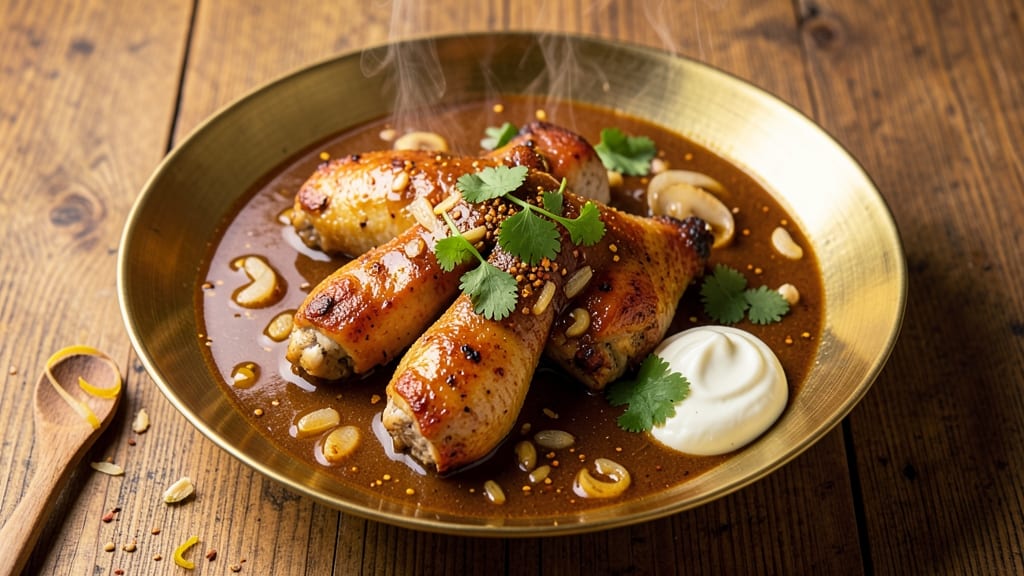
This Bangladeshi chicken curry recipe brings the bold, aromatic flavors of Bangladesh to your kitchen with its signature blend of five-spice and fiery mustard seeds. 🔥 The dish starts with a fragrant marinade of yogurt and spices that tenderizes the chicken while infusing it with depth.
What sets this curry apart is the balance of heat from mustard oil and the earthy warmth of panch phoron—a five-spice blend essential to Bangladeshi cuisine.
The cooking process transforms simple ingredients into a rich, velvety sauce that clings to tender chicken pieces, creating a dish that's both comforting and complex. Slow-cooking allows the flavors to meld beautifully, while the finishing touches of fresh cilantro and lemon brighten the dish without overpowering its robust spices.
This recipe delivers restaurant-quality results with a method that's straightforward yet deeply flavorful. What makes this curry truly special is its versatility—serve it with steamed basmati rice for a classic pairing, or pair it with fluffy roti or naan for a hearty meal.
The aroma alone will transport you to the streets of Dhaka, where this dish is a staple in homes and restaurants alike. It's the kind of meal that brings people together, offering both warmth and satisfaction in every bite.
Whether you're cooking for family or hosting a dinner party, this recipe scales beautifully while maintaining its authentic taste. The key lies in patience and layering flavors—each step builds on the last to create a dish that's as memorable as it is delicious.
Let's get started on crafting this flavorful masterpiece.
Ingredients for bangladesh chicken curry
Fifteen ingredients create this aromatic Bangladeshi chicken curry with its signature five-spice heat and mustard oil richness.
| Ingredient | Amount | Notes |
|---|---|---|
| Boneless Chicken Thighs 🍗 | 1 ½ lb | Skin-on preferred for flavor |
| Plain Yogurt 🥛 | ½ cup | Full-fat for best texture |
| Mustard Oil 🫒 | ¼ cup | For authentic flavor |
| Panch Phoron 🌶️ | 1 tbsp | Five-spice blend essential |
| Garlic Cloves 🧄 | 6 cloves | Minced for marinade |
| Onions 🧅 | 1 medium | Finely chopped |
| Tomatoes 🍅 | 2 medium | Pureed for sauce base |
| Ground Cumin 🌿 | 1 tsp | Toasted for depth |
| Ground Coriander 🌿 | 1 tsp | Freshly ground preferred |
| Turmeric Powder 🌶️ | ½ tsp | Bright yellow color |
| Red Chili Powder 🌶️ | 1 tsp | Adjust for heat preference |
| Ginger 🌿 | 1 inch | Freshly grated |
| Fresh Cilantro 🌿 | ¼ cup | Chopped for garnish |
| Lemon Juice 🍋 | 1 tbsp | Freshly squeezed |
| Salt 🧂 | 1 tsp | Adjust to taste |
The panch phoron is non-negotiable for authentic flavor—look for it at Indian or Bangladeshi specialty stores or online. Penzeys Spices often carries it, or check the international aisle at Whole Foods. Mustard oil can be tricky to find outside South Asian markets, but Trader Joe's sometimes stocks it. If unavailable, use vegetable oil but reduce the amount by half—it lacks the depth of mustard oil's signature punch. For the chicken, thighs stay juicier than breasts during slow cooking, but use what you prefer. Fresh ginger and garlic are essential—dried spices won't deliver the same complexity.
No panch phoron? Mix 1/4 tsp each of fennel seeds, fenugreek seeds, nigella seeds, black pepper, and cardamom as a substitute. Mustard oil substitute? Olive oil or avocado oil at half quantity, but the flavor won't be identical. The tomatoes can be canned (drained) if fresh aren't available—just crush them by hand. For extra richness, add 1 tbsp of cashew paste to the sauce. The yogurt should be plain and full-fat—Greek yogurt works well if regular isn't available. If you can't find panch phoron or mustard oil, the dish will still be flavorful but lose its signature Bangladeshi character.
Mustard oil should be stored in a cool, dark place—it keeps for up to a year unopened. Once opened, refrigerate and use within 6 months. The panch phoron blend stays potent for 6 months in an airtight container. Fresh ginger and garlic can be peeled and frozen for up to 3 months. This curry tastes even better the next day as the flavors meld—portion into containers for easy lunches. The sauce thickens as it cools, so add a splash of water or yogurt if needed when reheating.
Why You'll Love This Recipe
- One-Pot Magic: I swear by this recipe when I’m too tired to dirty extra dishes. The chicken thighs marinate in yogurt while you prep the rest—no separate bowls, no fuss. Just toss everything in one pot, and let the mustard oil and panch phoron work their magic.
- Garlic Bomb: Between us, the garlic here isn’t just chopped—it’s minced and fried in that mustard oil until it’s golden and fragrant. That crispy edge with the creamy yogurt finish? It’s the kind of flavor that makes you pause mid-bite.
- Weeknight Workhorse: This curry is my go-to for busy nights, but it also impresses when company drops by. Serve it with rice and naan for a full meal, or let it star in a wrap for a quick lunch. (Yes, even on a Tuesday night.)
- Budget-Friendly Feast: Chicken thighs stretch further than breasts, and the pantry staples—yogurt, mustard oil, panch phoron—cost next to nothing. Plus, leftovers reheat like a dream, so you’ll have flavor without breaking the bank.
Step-by-step instructions for Bangladeshi chicken curry
Here's the authentic method that delivers restaurant-quality flavor with every bite.
👨🍳 Step 1: Marinate the Chicken with Yogurt and Spices
In a large bowl, combine the 1.5 lb boneless chicken thighs with the 0.5 cup plain yogurt, 1 tbsp panch phoron, 1 tsp ground cumin, 1 tsp ground coriander, 0.5 tsp turmeric powder, and 1 tsp salt. Mix thoroughly until every piece is well coated and the marinade clings to the meat.
Let the chicken marinate in the refrigerator for at least 30 minutes (or up to 2 hours for deeper flavor). This step is crucial—it tenderizes the meat and allows the spices to penetrate. You'll notice the chicken absorbs the yogurt and becomes more pliable, making it easier to handle and cook evenly.
🔥 Step 2: Cook the Chicken in Mustard Oil
Heat the 0.25 cup mustard oil in a heavy-bottomed pot over medium-high heat until it shimmers but doesn't smoke. Add the marinated chicken, spreading it in a single layer. Cook undisturbed for 3-4 minutes until the bottom develops a golden crust.
Here's where the magic happens: the mustard oil carries the panch phoron's aromatic heat while searing the chicken. You'll smell the distinctive mustard aroma—this is your signal that the oil is ready. Once the chicken releases easily from the pot, gently stir and continue cooking for another 5-6 minutes until the meat is no longer pink in the center.
🍳 Step 3: Build the Flavor Base with Aromatics
Remove the chicken from the pot and set it aside. In the same pot, reduce the heat to medium and add the 1 medium onion, 6 cloves garlic, and 1 inch ginger. Sauté for 3-4 minutes until the onions turn golden brown and the garlic becomes fragrant.
Add the 2 medium tomatoes (pureed or finely chopped) and cook for 5-6 minutes until the oil separates from the mixture. This step develops the curry's rich, complex flavor. You'll see the mixture darken and thicken slightly—this is when the raw taste of tomatoes transforms into sweet, caramelized notes.
🥘 Step 4: Simmer the Curry to Perfection
Return the chicken to the pot and pour in 1 cup water (or enough to just cover the chicken). Bring to a gentle simmer, then reduce heat to low. Cover and cook for 20-25 minutes until the chicken is fork-tender and the sauce has thickened to a rich consistency.
Stir in the 1 tbsp lemon juice and adjust seasoning with additional salt if needed. The curry should be flavorful but not overly salty—balance is key. You'll notice the sauce cling to the chicken, creating a glossy, aromatic coating that's characteristic of authentic Bangladeshi curry.
🔪 Step 5: Finish and Garnish
Remove from heat and let the curry rest for 5 minutes. Garnish with 0.25 cup chopped fresh cilantro and serve hot with steamed rice or naan. The final dish should have a vibrant yellow hue from the turmeric, with tender chicken pieces swimming in a rich, spiced sauce that's neither too dry nor too watery.
This curry delivers the perfect balance of heat from the mustard oil and panch phoron, with the yogurt providing a subtle tanginess. Each bite should offer a complex interplay of spices, tender meat, and aromatic sauce—just like the curries you'd find in Bangladeshi homes.
Pro Tips For Making Bangladesh Chicken Curry
- Bloom the Panch Phoron: I learned this the hard way—tossing raw panch phoron into hot oil just makes it burn and turn bitter. Instead, bloom it in 2 tablespoons of mustard oil on medium-low for 30 seconds until the spices smell fragrant but aren’t browned. That’s when the real magic starts.
- Marinate Chicken in Yogurt Overnight: This isn’t the prettiest method, but it’s the tastiest. Skip the rushed 30-minute marinade and let the thighs sit in yogurt (with salt and a pinch of turmeric) for at least 8 hours—ideally overnight. The yogurt tenderizes the meat and keeps it juicy, even when you sear it later.
- Sear Chicken in Batches: Crowding the pan turns your chicken curry into a sad, greasy mess. Cook the thighs in single layers over medium-high heat for 4-5 minutes per side until they develop a deep golden crust. Yes, it takes two rounds, but the texture makes all the difference.
- Crush Garlic with Salt First: Sounds weird, but it works: smash the garlic cloves with a pinch of salt in a mortar before adding them to the pan. This releases more flavor and prevents them from sticking to the bottom. Add them after the panch phoron blooms but before the onions—just when the oil is shimmering but not smoking.
Wine and beer pairings for this bangladesh chicken curry
Beverage Pairings
This rich, spiced curry pairs beautifully with lightly effervescent Indian lagers like Kingfisher or Bangla Lager—their crispness cuts through the mustard oil's intensity. The effervescence also cleanses your palate between bites, letting the panch phoron's complexity shine.
For a non-alcoholic option, try ginger beer with a squeeze of lime—it mirrors the curry's spicy-sweet balance. 🍺
Wine Recommendations
Aromatic white wines like Viognier or Gewürztraminer complement the curry's floral notes from panch phoron. Their subtle sweetness and lychee undertones harmonize with the mustard oil's heat, while the wine's acidity prevents the dish from feeling too heavy. Avoid bold reds—they'll clash with the curry's delicate spice profile.
Regional Beer Pairings
In Bangladesh, this curry is traditionally served with local microbrews like Bottled Beer (a crisp, hoppy lager) or Tiger Beer (a maltier option). For international palates, a Belgian Witbier (like Hoegaarden) works wonders—the coriander and citrus notes echo the curry's aromatic spices. Serve slightly chilled to enhance the contrast.
Non-Alcoholic Options
For a refreshing non-alcoholic match, mango lassi (yogurt-based) mirrors the curry's creamy texture while adding sweetness. Alternatively, sparkling water with a slice of cucumber and mint provides a cooling counterpoint to the mustard oil's heat. The mint also subtly enhances the panch phoron's earthy notes. ✨
Serving Temperature
Serve the curry at 165°F with beverages at room temperature (60-65°F) for the best contrast. Cold drinks (like lager) should be 40-45°F to maintain crispness, while wine should be served slightly cooler than room temperature. The temperature differential enhances flavor perception, making each bite and sip more vibrant. 🌡️
Nutrition facts
Frequently asked questions
Can I substitute mustard oil with another oil?
Yes, but the flavor will differ. Mustard oil is essential for authentic taste—its pungent aroma is key. Use vegetable oil or avocado oil at half the quantity (1/8 cup instead of 1/4 cup) if mustard oil isn't available. For a closer substitute, try sesame oil (toasted) but reduce to 1 tbsp—it lacks the same depth. The dish will still be flavorful but won't have the signature Bangladeshi character.
What's the best way to make this curry less spicy?
Reduce the red chili powder to 1/2 tsp or omit it entirely. For extra mildness, add 1/4 cup plain yogurt at the end to cool the heat. If using panch phoron, remove the black peppercorns before grinding it yourself. The yogurt marinade also helps balance spice—don't skip it! For a creamy finish, stir in 1 tbsp coconut milk while serving.
Can I use chicken breast instead of thighs?
Yes, but thighs are preferred for juiciness. If using breasts, cut them into 1-inch pieces and reduce marinating time to 20 minutes (they cook faster). Add 2 tbsp water during simmering to prevent drying. For extra moisture, baste the chicken with 1 tbsp yogurt every 5 minutes while cooking. The texture will be leaner but still delicious.
How do I store leftovers?
Cool the curry to room temperature, then transfer to an airtight container and refrigerate for up to 3 days. For longer storage, freeze portions for up to 2 months. Reheat gently on low heat with 1 tbsp water to restore moisture. The flavors actually improve overnight as spices meld! Reheat only until steaming hot (165°F internally).
What's the secret to getting the perfect texture?
The key is low-and-slow cooking and proper liquid balance. Simmer uncovered for the last 5 minutes to thicken the sauce naturally. For extra tenderness, add 1/4 cup water if the sauce seems too dry. The chicken should be fork-tender but not falling apart. If using breasts, avoid overcooking—they'll turn rubbery after 20 minutes. Rest the curry 5 minutes before serving to let flavors settle.