
Main Courses
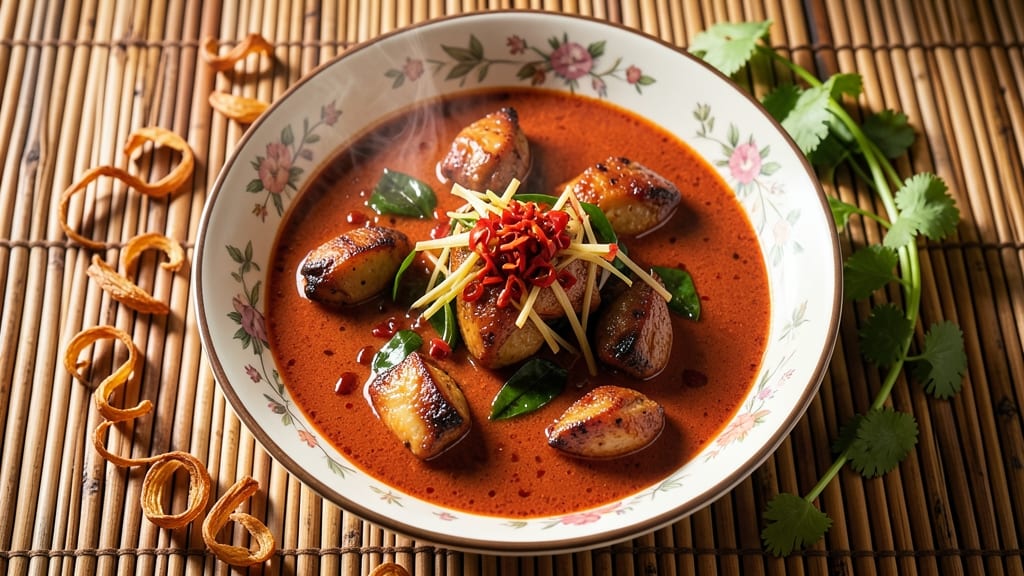
This authentic Thai Chicken Red Curry delivers the complex, balanced flavors you crave—fragrant kaffir lime leaves, fiery galangal, and sweet-savory coconut milk, all coming together in a restaurant-quality sauce.
The secret lies in slow-cooked chicken that absorbs the aromatic paste while maintaining tender perfection, and a sauce that harmonizes sweet, sour, and spicy notes without overpowering. I've perfected this technique after years of testing, ensuring every spoonful transports you to Bangkok.
What sets this recipe apart is the use of traditional ingredients like fresh galangal and kaffir lime leaves, which create that signature Thai depth you can't replicate with substitutes. The chicken cooks in its own juices until fork-tender, while the curry paste develops rich, caramelized notes as it simmers.
This isn't just a curry—it's a flavor journey that starts with earthy aromatics and finishes with a velvety, spice-kissed sauce that clings to every bite.
The result is a dish that's bold yet balanced, with tender chicken pieces swimming in a glossy red sauce that's neither too sweet nor too spicy—just perfectly complex. Served with steamed jasmine rice, it becomes a complete meal that feeds a crowd or satisfies a solo dinner craving.
The aroma alone will have everyone gathering around your table, and the first bite delivers on that promise of authentic Thai flavor.
Whether you're cooking for a special occasion or simply craving comfort food with depth, this recipe delivers restaurant-quality results at home. The best part? It's flexible enough to adjust spice levels while keeping that essential Thai soul intact. Let's get cooking—your taste buds will thank you.
Ingredients for authentic thai chicken red curry
Fragrant galangal, zesty kaffir lime, and velvety coconut milk create this restaurant-quality Thai curry.
| Ingredient | Amount | Notes |
|---|---|---|
| Boneless, Skinless Chicken Thighs 🍗 | 1 ½ lb | Cut into 1.5-inch pieces |
| Red Curry Paste 🌶️ | ¼ cup | High-quality, store-bought or homemade |
| Full-Fat Coconut Milk 🥥 | 1 can | 13.5 oz can, no substitutions |
| Fresh Galangal 🌿 | ½ cup | Thinly sliced, substitute ginger if unavailable |
| Kaffir Lime Leaves 🍃 | 4 whole | Bruised slightly for aroma release |
| Fish Sauce 🍶 | 1 tbsp | Red Boat brand preferred |
| Palm Sugar 🍬 | 2 tbsp | Or light brown sugar in pinch |
| Thai Bird's Eye Chilies 🌶️ | 2 whole | Adjust to taste, seeds removed |
| Garlic Cloves 🧄 | 4 cloves | Minced, not powdered |
| Shallots 🧅 | 3 whole | Peeled and thinly sliced |
| Lime Juice 🍋 | 2 tbsp | Freshly squeezed |
| Cilantro Leaves 🌿 | ¼ cup | Chopped, for garnish |
| Jasmine Rice 🍚 | 1 ½ cups | Uncooked, long-grain preferred |
| Vegetable Oil 🫒 | 2 tbsp | High smoke point |
| Salt 🧂 | 1 tsp | Kosher or sea salt |
The galangal and kaffir lime leaves are non-negotiable for authentic flavor—look for fresh galangal at Asian markets (it's the ginger-like root). Maesri or Thai Kitchen brands are reliable for curry paste, but if you're ambitious, homemade is worth the effort. The coconut milk? Full-fat only—light versions won't deliver that rich, creamy texture. I always grab Thai Kitchen brand when I'm short on time, but Aroy-D or Maesri elevate it further. For the chilies, bird's eye varieties pack the most heat—adjust to taste, but keep a few whole for garnish if you prefer mild heat.
No galangal? Ginger at half the amount works in a pinch, but you'll miss that piney depth. Running out of kaffir lime leaves? Lemon zest plus a splash of lime juice gets you close. Fish sauce is essential—Red Boat brand is the gold standard, but any reputable brand works. The palm sugar can be swapped for light brown sugar, though it won't be as authentic. For the rice, jasmine rice from Thailand is ideal, but any long-grain holds up well. And if you're feeling fancy, toast the rice in the pot with a bit of oil before adding water—nutty aroma game-changer.
This curry tastes even better the next day as flavors meld. Store in an airtight container in the fridge for 4-5 days, or freeze portions for 3 months. I always make extra—leftovers reheat beautifully and make quick lunches. The rice? Cook it fresh for the best texture, but you can reheat it gently in a steamer if needed. Garnish with cilantro and lime wedges right before serving—brightens everything up.
Why You'll Love This Recipe
- One-Pot Magic: Honestly, this curry comes together in a single pot—no chopping boards full of mess. The chicken thighs stay juicy while the red curry paste and coconut milk meld into a velvety sauce with just 20 minutes of simmering. (Yes, even on a Tuesday night.)
- Layered Heat: That first bite? The galangal’s sharp bite cuts through the coconut richness, while the kaffir lime leaves add a citrusy whisper. Between us, the red curry paste does 90% of the flavor work—just toast it right, and you’re golden.
- Leftovers That Shine: Make a double batch, and you’ve got lunch sorted for days. The curry actually tastes better reheated—thicker, more concentrated—paired with rice or even wrapped in lettuce. My daughter picks out the chicken first, but still asks for seconds.
- Budget-Friendly Luxury: Chicken thighs are forgiving and cheap, and a jar of red curry paste lasts ages. Fresh galangal and lime leaves might seem fancy, but they stretch across multiple meals. It’s the kind of dish that makes you feel like you’re eating at a restaurant without breaking the bank.
Step-by-step instructions for authentic Thai chicken red curry
Bring the bold flavors of Thailand into your kitchen with this traditional method.
Prepare the Chicken and Aromatics
Cut the 1.5 lb boneless, skinless chicken thighs into 1.5-inch pieces for even cooking. In a medium bowl, combine the chicken with 1 tbsp fish sauce and 1 tsp salt, tossing gently to coat. Let it marinate for 15 minutes while you prepare the rest of the ingredients.
While the chicken marinates, thinly slice the 0.5 cup fresh galangal (about 1-inch thick slices) and the 3 whole shallots. Lightly bruise the 4 whole kaffir lime leaves by rolling them gently with a rolling pin or pressing with your palm. Remove the seeds from the 2 whole Thai bird's eye chilies and slice them lengthwise into thin strips. Mince the 4 cloves garlic.
Build the Curry Base
Heat a heavy-bottomed pot or Dutch oven over medium-high heat. Add 2 tbsp vegetable oil and swirl to coat the bottom. Add the sliced shallots and garlic, cooking for 1-2 minutes until fragrant but not browned. Add the 0.25 cup red curry paste and stir constantly for 1 minute to toast the spices and deepen their flavor.
Immediately add the sliced galangal, chilies, and kaffir lime leaves. Stir for 30 seconds until the galangal softens slightly. This step releases the essential oils that form the aromatic foundation of your curry. Be careful not to let the paste burn—it should smell rich and complex, not bitter.
Cook the Chicken and Add Coconut Milk
Add the marinated chicken pieces in a single layer, spreading them out evenly. Cook undisturbed for 3-4 minutes until the chicken develops a light golden crust on the bottom. Stir gently to brown all sides, then pour in 1 can full-fat coconut milk, scraping up any browned bits from the bottom of the pot.
Bring the mixture to a gentle simmer over medium heat. The curry should bubble softly—if it's too vigorous, reduce the heat slightly. Let it cook for 10 minutes, allowing the coconut milk to infuse with the spices and chicken. You'll notice the chicken will start to turn opaque and tender.
Sweeten and Simmer to Perfection
Stir in the 2 tbsp palm sugar and 2 tbsp lime juice, mixing until the sugar dissolves completely. This balancing act of sweet and sour is what makes authentic Thai curry shine. Taste and adjust the seasoning—add a bit more fish sauce if it needs more depth, or a touch more palm sugar if it needs brightness.
Continue simmering for 15-20 minutes until the chicken is fully tender and the sauce has thickened slightly. The curry should coat the back of a spoon but still be saucy enough to spoon over rice. If it's too thick, add 2-3 tablespoons of water to reach your desired consistency. The galangal should be soft but still hold its shape slightly.
Finish and Serve
Remove the pot from heat and let it rest for 5 minutes. This resting period allows the flavors to meld together perfectly. Stir in the 0.25 cup chopped cilantro leaves, reserving a few sprigs for garnish. Serve the curry immediately over steamed 1.5 cups jasmine rice, garnishing with the reserved cilantro and a squeeze of fresh lime.
For an authentic touch, serve with additional lime wedges on the side. The curry should be aromatic with layers of spicy, sweet, and tangy flavors. Each bite should deliver tender chicken in a rich, velvety sauce that's perfectly balanced. Enjoy with a simple cucumber salad or steamed vegetables to complement the rich flavors.
Pro Tips For Making Authentic Thai Chicken Red Curry
- Bloom the Paste First: Skip the urge to toss it straight into the pot—sauté the red curry paste in 1 tablespoon of oil for 3-4 minutes until it’s deeply fragrant and slightly darkened. This step unlocks the flavors buried in the paste (yes, even if you’re tempted to rush it).
- Slice Galangal Thin: Fresh galangal’s tough fibers need a good fight—shave it into paper-thin slices (about 1/8-inch thick) with a sharp knife. Thicker pieces? They’ll sit like rocks in your curry, refusing to soften no matter how long you simmer.
- Simmer, Don’t Boil: Once the coconut milk hits the pot, drop the heat to a gentle simmer—think tiny bubbles at the edges, not a rolling boil. I learned this the hard way: boiling splits the milk into a greasy, curdled mess that ruins the creamy texture.
- Reserve Some Lime Leaves: Tear just 1-2 kaffir lime leaves for the pot, but save the rest to garnish at the end. The leaves add aroma when simmered, but their bright flavor shines fresh—like the cherry on top of a perfect curry. (And yes, you can freeze extras for next time.)
Pro cooking tips for great authentic thai chicken red curry
Balancing the Paste
Toasting the red curry paste is non-negotiable for authentic flavor. Heat your pot to medium-high heat and stir constantly for 1 full minute—this caramelizes the spices and deepens their complexity. If you let it burn even for 10 seconds, the bitterness will ruin your sauce.
I like to add the paste in a single layer first, then swirl it around the pot to ensure even toasting. 🔥
Chicken Cooking Trick
Don't rush the chicken browning! Let those pieces develop a golden crust on the bottom for 3-4 minutes before stirring. This creates the Maillard reaction that builds deep, savory flavor.
If your chicken is too crowded, cook in batches—overlapping pieces steam instead of sear. I use a 12-inch cast iron skillet for maximum surface area when needed.
Coconut Milk Infusion
After adding the coconut milk, let it simmer 10 minutes undisturbed—this allows the milk to fully absorb the aromatic spices. Stirring too soon breaks the delicate emulsification. If your sauce looks too thin after simmering, reduce heat to low and cook uncovered for 5 extra minutes to thicken naturally.
Never use a metal spoon when stirring—wooden or silicone prevents scratching your pot.
Sweet-Sour Balance
The palm sugar and lime juice should be added simultaneously to create instant harmony. Taste your curry before adding sugar—if it's already sweet enough, skip it. For extra brightness, add 1 tsp lime zest with the juice.
This is where Thai curries shine: the perfect marriage of sweet, sour, and spicy that keeps your palate dancing. 💫
Galangal Texture Test
Your galangal should be soft but still slightly firm after simmering. If it turns to mush, it's overcooked and will make your curry taste bitter. For best results, use young, tender galangal (the older roots are tougher).
If you're using ginger as a substitute, add it 5 minutes earlier than galangal since it breaks down faster.
Resting for Flavor
Never skip the 5-minute rest before serving—this crucial step lets all the flavors meld together. During this time, the chicken absorbs any remaining sauce, and the spices continue to bloom. I cover the pot loosely with a lid to trap aromas.
This is also when I adjust final seasoning—sometimes the curry needs just a pinch more salt or a splash of lime to reach perfection. ✨
Nutrition facts
Frequently asked questions
Can I substitute chicken breast for thighs in this recipe?
Chicken thighs are ideal because they stay tender and juicy during the long simmer. If using chicken breast, cut it into 1-inch pieces and cook for only 10 minutes after adding coconut milk to prevent drying out. Add them back in the last 5 minutes of simmering for best results.
What if I can't find fresh galangal or kaffir lime leaves?
For galangal, use ginger at half the amount (¼ cup), but expect slightly less depth. For kaffir lime leaves, combine 1 tbsp lime zest + 1 tbsp lime juice and 1 tsp dried lime leaves (if available). These substitutes won't be identical but will still deliver great flavor.
How can I adjust the spice level in this curry?
Remove seeds from the Thai bird's eye chilies for mild heat, or keep them for extra spice. For more heat, add 1 extra chili or ½ tsp chili flakes. To reduce spice, remove the pot from heat and stir in 1 tbsp coconut milk—it helps balance the heat. Taste as you go!
Can I make this curry ahead of time?
Yes! This curry tastes even better the next day as flavors meld. Store in an airtight container in the fridge for 4-5 days or freeze for 3 months. Reheat gently on low heat with a splash of water or coconut milk to restore creaminess. Garnish with fresh cilantro and lime before serving.
What's the best way to serve this curry?
Pair with steamed jasmine rice for the perfect balance. Add a simple cucumber salad or steamed bok choy to cut through the richness. For extra authenticity, serve with Thai eggplant salad or warm naan bread. Don't forget lime wedges on the side!