
Sauces & Condiments
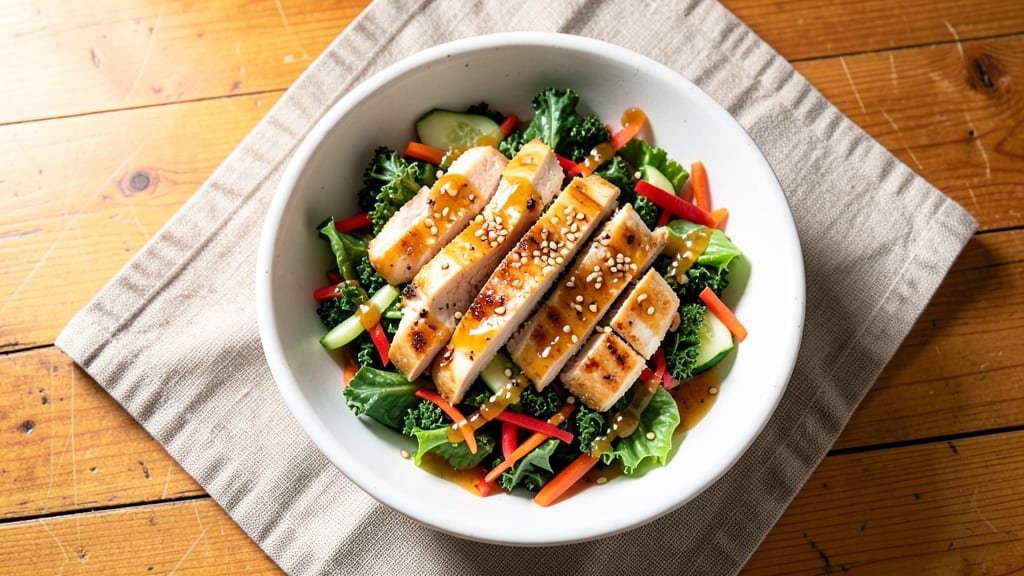
This Asian chicken salad dressing mimics Panera's signature creamy sesame-ginger harmony with just five simple ingredients. The balance of tangy rice vinegar, rich sesame oil, and sweet honey creates a velvety sauce that clings perfectly to greens and protein.
I developed this recipe after realizing how often I reached for store-bought versions that never quite captured the restaurant-quality depth.
The secret lies in emulsifying the dressing properly—whisking the ingredients together until smooth ensures that creamy texture you crave. A touch of fresh ginger adds warmth while soy sauce provides that essential umami backbone.
What makes this dressing special is how it transforms basic chicken salad into something restaurant-worthy with minimal effort.
What you'll end up with is a dressing that's perfectly balanced—tangy enough to cut through rich chicken, sweet enough to complement crisp vegetables, and creamy enough to coat every bite.
The best part? It comes together in just 5 minutes with no special equipment. This is the kind of dressing that makes you want to eat salads every day.
Use it on chicken salad, as a marinade for grilled chicken, or even drizzled over noodles. The possibilities are endless, but the technique remains the same—simple, foolproof, and delicious. Let's get started!
Ingredients for asian chicken salad dressing panera
Five ingredients transform into Panera's signature creamy dressing—simple, tangy, and restaurant-worthy.
| Ingredient | Amount | Notes |
|---|---|---|
| Sesame Oil 🫒 | ¼ cup | Toasted for nutty aroma |
| Rice Vinegar 🍶 | ¼ cup | White or seasoned variety |
| Honey 🍯 | ¼ cup | Light or wildflower preferred |
| Soy Sauce 🍜 | ¼ cup | Low-sodium preferred |
| Fresh Ginger 🧄 | 1 tbsp | Finely grated, not minced |
| Sesame Seeds 🌾 | 1 tbsp | Toasted for garnish |
| Water 💧 | ½ cup | Room temperature preferred |
Sesame oil is the star here. Kadoya or La Choy are my go-tos—they've got that rich, toasted flavor. Grab the toasted sesame oil, not the mild kind. If you're worried about it being too strong, use half toasted and half regular. Fresh ginger? Trader Joe's sells pre-grated in a jar, which is a lifesaver. The honey should be light—Manuka or clover work best. For soy sauce, Kikkoman is foolproof, but any good-quality brand will do. The water is just to help everything emulsify smoothly.
No sesame oil? Vegetable oil plus a pinch of sesame seeds gets you close, though it won't have that same depth. Short on rice vinegar? Apple cider vinegar works in a pinch, but it'll taste slightly different. The honey can be swapped for maple syrup or agave if you're avoiding it. For soy sauce, coconut aminos are a soy-free alternative. The sesame seeds are purely decorative—skip them if you're in a rush, but they add that perfect crunch. The dressing thickens as it sits, so if it's too thick after mixing, add a splash more water.
This keeps beautifully in the fridge for 2 weeks, though it's best used within 5-7 days. Store it in a clean glass jar with a tight lid. If it separates, just give it a quick whisk before using. I like to make a double batch—one for salads, one for drizzling over noodles. The flavor actually improves after sitting for a few hours, so let it rest if you can. Freezes for 3 months if you want to prep ahead.
Why You'll Love This Recipe
- Five-Ingredient Magic: I swear, this dressing comes together with just a whisk and a bowl—no fancy gadgets, no stress. The sesame oil hits first, then it’s just stirring rice vinegar, honey, soy sauce, and grated ginger until it’s silky smooth. That’s it. No peeling garlic, no chopping herbs, no waiting for anything to cool.
- Umami Bomb: Between us, the honey-soy-ginger combo is dangerously addictive. The ginger adds a little kick, the soy sauce brings that deep savory punch, and the honey? It rounds everything out so it’s not too sharp. Drizzle it on greens or toss it with chicken, and suddenly you’ve got restaurant-quality flavor without the markup.
- Meal Prep MVP: This dressing keeps like a champ in the fridge for up to a week, which means I can make a big batch on Sunday and use it all week long. It’s my secret weapon for quick lunches—just toss it with pre-cooked chicken, cucumbers, and shredded carrots, and boom, you’ve got a fresh salad in minutes. No sad, wilted greens here.
- Budget-Friendly Luxury: Honestly, the ingredients cost pennies but taste like you spent hours slaving over a stove. A little sesame oil goes a long way, and the rest are pantry staples. I’ve made this for picnics, potlucks, and even as a dip for spring rolls—it’s always a crowd-pleaser without breaking the bank. Plus, it’s way cheaper than buying pre-made dressing.
Step-by-step instructions for Asian chicken salad dressing
This creamy dressing comes together in minutes with simple ingredients you already have.
Toast the Sesame Seeds and Grate the Ginger
Start by toasting the 1 tablespoon sesame seeds in a dry skillet over medium-low heat for 2-3 minutes until they turn a rich golden brown and release their nutty aroma. Watch them closely—they burn quickly. Transfer the toasted seeds to a small bowl and set aside for garnish later.
While the seeds toast, use a fine grater to grate the 1 tablespoon fresh ginger into a fine paste—no need for mincing. The finer the better, as it will blend more smoothly into the dressing. I like to use a microplane for this step because it gives me perfect control over the texture. Set the grated ginger aside with the toasted seeds.
Whisk Together the Wet Ingredients
In a medium mixing bowl, combine the 0.25 cup sesame oil, 0.25 cup rice vinegar, 0.25 cup honey, and 0.25 cup soy sauce. Use a whisk to blend these ingredients thoroughly for about 30 seconds until they're fully incorporated and the mixture looks smooth and homogeneous.
This is where the magic happens—the balance of sweet, tangy, and savory flavors begins to develop. If you're using a seasoned rice vinegar, you'll notice a more complex flavor profile right away. The honey should dissolve completely, giving the dressing its signature creamy texture. If you see any undissolved honey, stir in 1 tablespoon of the 0.5 cup water to help it blend.
Add the Grated Ginger and Water
Add the grated ginger and the remaining 0.4 cup water to the bowl with the wet ingredients. Whisk everything together again for another 30 seconds until the ginger is fully dispersed and the dressing is smooth. You want the ginger to blend in completely—no visible flecks.
Here's the thing—adding the water gradually helps create that perfect creamy consistency without making the dressing too thin. If it's still too thick after whisking, add another 1-2 tablespoons of water at a time until it reaches your desired consistency. It should coat the back of a spoon but still be pourable. Taste and adjust the seasoning if needed—you might want to add a touch more honey for sweetness or soy sauce for saltiness.
Chill and Adjust for Creaminess
Cover the bowl with plastic wrap and refrigerate the dressing for at least 30 minutes—this is crucial for letting the flavors meld together. The longer it chills, the better the flavors will develop, so if you have time, let it sit for up to 2 hours. During this time, the dressing will thicken slightly, which is exactly what you want for that creamy Panera-style texture.
Before using, give the dressing a good stir and taste it one more time. If it's too thick, thin it out with a splash of water or a drizzle of rice vinegar. If it's too thin, let it sit uncovered at room temperature for 10-15 minutes to thicken slightly. The ideal consistency should be smooth, creamy, and just thick enough to cling beautifully to your salad greens and chicken pieces.
Pro Tips For Making Asian Chicken Salad Dressing Panera
- Grate Ginger Thin: Use the smallest holes on your grater—this keeps the texture smooth and prevents that unfortunate "ginger chunk" surprise in your dressing. I learned this the hard way after biting into a piece mid-bite.
- Warm the Honey: Drizzle the honey into the warm dressing (not boiling, just off the stove) to help it blend fully—cold honey clumps like a stubborn guest who won’t leave. Stir for 10 seconds, and it’ll integrate like magic.
- Taste Before Adding Soy: Check the balance of sweet (honey), tang (vinegar), and umami before dumping in the soy sauce—it’s easier to adjust than fix an over-salty dressing. Start with half the soy and adjust.
- Swirl in Sesame Oil: Let the dressing cool slightly, then drizzle the sesame oil in a slow spiral while stirring—this keeps it from separating and gives that signature nutty aroma. Add it last, or you’ll regret the oily sheen.
Troubleshooting great asian chicken salad dressing panera
Thickening Issues
The most common problem is dressing that separates or stays too thin. If your dressing looks oily or watery after mixing, whisk in 1 tablespoon of cornstarch slurry (mix 1 tsp cornstarch with 2 tbsp cold water) and heat gently for 1-2 minutes on the stove.
This creates a smooth, creamy texture without altering the flavor. For immediate fixes, simply refrigerate uncovered for 10-15 minutes—the evaporation will thicken it naturally. 💫
Ginger Not Dissolving
If you see visible ginger flecks after whisking, pulse the mixture in a blender for 10-15 seconds. This ensures a completely smooth texture. For a quicker fix, strain the dressing through a fine-mesh sieve to catch any undissolved bits.
I've found that using a microplane for grating ginger gives the finest texture, which blends better. If you're in a rush, swap fresh ginger for ½ tsp ground ginger, though the flavor won't be as vibrant.
Too Salty or Sweet
Adjusting the balance is easy—add 1-2 teaspoons of honey to reduce saltiness or ½ teaspoon of rice vinegar to cut sweetness. For a more complex fix, add ½ teaspoon of grated lime zest, which adds brightness without altering the core flavors.
Remember, taste as you go! The dressing should have a perfect harmony of all ingredients, not just one dominating. If you oversalt, a splash of water helps dilute without thinning too much.
Oily Separation
When sesame oil separates, simply whisk vigorously for 1 full minute. The friction helps re-emulsify the dressing. For stubborn separations, add 1 tablespoon of Dijon mustard, which acts as a natural emulsifier. Store-bought versions often use xanthan gum for this purpose, but mustard works perfectly at home.
If you're making a large batch, whisk in ½ teaspoon of xanthan gum, then blend briefly to ensure even distribution.
Flavor Too Mild
Boost the umami by adding ½ teaspoon of fish sauce, which deepens the savory notes without overpowering. For a spicier kick, stir in ¼ teaspoon of red pepper flakes. If you want more complexity, add 1 teaspoon of toasted sesame oil, which enhances the nutty aroma.
The key is to add these enhancements gradually—taste after each addition to avoid overdoing it. This dressing should be balanced, not overwhelming.
Storage Problems
If your dressing develops mold after refrigeration, it's time to toss it—never risk food safety. For longer storage, divide the dressing into ice cube trays, freeze, then transfer to a freezer bag. Thaw overnight in the fridge, then whisk to restore consistency.
If the dressing separates after freezing, whisk in 1 tablespoon of warm water***, then blend briefly to re-emulsify. Always store in airtight containers to prevent contamination and flavor loss.
Nutrition facts
Frequently asked questions
Can I make this dressing without honey?
Yes! Swap the 0.25 cup honey for 0.25 cup maple syrup or 0.2 cup agave nectar for a vegan-friendly version. For a lower-sugar option, use 0.1 cup honey plus 0.1 cup sugar-free maple syrup. The dressing will still taste balanced, though honey adds natural depth that's hard to replicate.
How do I keep the dressing creamy longer?
For extra creaminess that lasts, whisk in 1 teaspoon of cornstarch mixed with 2 tablespoons cold water after chilling. Heat the dressing gently for 1 minute to thicken it permanently. Store in an airtight container, and if it separates, whisk vigorously for 30 seconds before using. The dressing thickens more as it sits, so make it slightly thinner than desired initially.
What's the best way to use leftover dressing? This versatile dressing works beyond salads! Drizzle it over grilled chicken, use as a marinade for tofu or shrimp, or toss with cold noodles. For extra richness, stir in 1 tablespoon of tahini or ½ cup Greek yogurt. It also makes a fantastic dip for spring rolls or veggie sticks. Just
Why does my dressing taste too strong?
If the flavors are overpowering, the sesame oil or soy sauce may be too dominant. Dilute with 1-2 tablespoons of water or rice vinegar to balance it. For a milder taste, reduce the soy sauce to 0.15 cup next time. If the ginger is too sharp, add ½ teaspoon of honey or a pinch of sugar to mellow it. Always taste as you go—this dressing should be harmonious, not intense.
Can I make this dressing spicier?
Add ¼ teaspoon of red pepper flakes or ½ teaspoon of sriracha for heat. For a smoky kick, stir in ½ teaspoon of smoked paprika. If you love ginger, add an extra ½ teaspoon of grated fresh ginger. Start with small amounts—you can always add more, but you can't take it out! The dressing should complement, not overpower, your meal.