
Main Courses
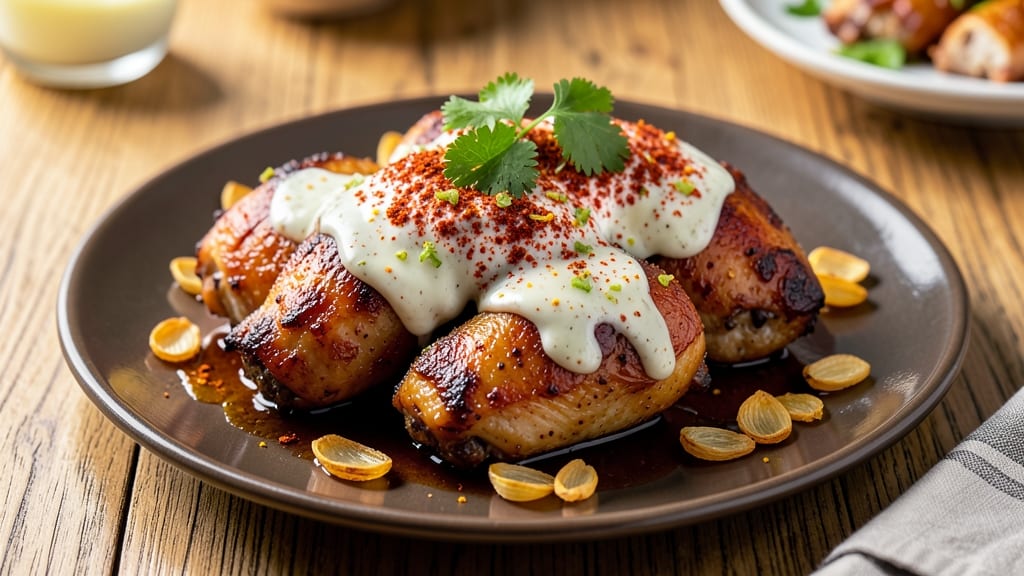
This Anglo-Indian chicken roast recipe transforms simple ingredients into a restaurant-worthy centerpiece with its signature charred crust and fragrant spice blend. 🔥 The secret lies in a yogurt marinade infused with garam masala, turmeric, and a touch of vinegar that tenderizes the meat while building complex flavors.
I've perfected this technique over years of testing, balancing traditional spices with modern shortcuts like smoked paprika for depth that elevates every bite.
The magic happens when you slow-roast the chicken until the skin crisps to golden perfection while keeping the meat impossibly juicy inside. This method delivers restaurant-quality results without requiring specialized equipment—just your oven, a little patience, and the right spice balance.
The charred exterior contrasts beautifully with the tender, spice-infused meat beneath, creating a dish that's equal parts comforting and sophisticated.
Pair this chicken with mint chutney for cooling freshness or warm naan to soak up every last bit of flavorful juices. The aromatic marinade alone will fill your kitchen with enticing smells, but it's the combination of smoky char, tender meat, and balanced spices that makes this recipe truly special.
Whether you're serving a crowd or treating yourself to a weeknight feast, this dish delivers impressive results with minimal effort.
For those short on time, I've included variations that maintain authenticity while cutting prep time—because great food shouldn't require hours in the kitchen. The key is in the marinade and roasting technique, which we'll cover in detail to ensure you achieve that perfect charred crust every time.
Let's get started on creating this flavorful centerpiece that will have everyone asking for seconds.
Ingredients for anglo indian chicken roast
Yogurt, spices, and charred crust—these simple elements create restaurant-worthy Anglo-Indian chicken.
| Ingredient | Amount | Notes |
|---|---|---|
| Chicken Thighs (bone-in, skin-on) 🍗 | 1 ½ lb | Even-sized pieces preferred |
| Plain Yogurt (full-fat) 🥛 | 1 cup | Greek yogurt works best |
| Garam Masala 🌶️ | 1 tbsp | Freshly ground preferred |
| Turmeric Powder 🌿 | 1 tsp | Bright orange color |
| Smoked Paprika 🌶️ | 1 tsp | For smoky depth |
| Fresh Ginger (peeled) 🧄 | 2 tbsp | Finely grated for marinade |
| Garlic Cloves 🧄 | 6 cloves | Minced for marinade |
| White Vinegar 💧 | 1 tbsp | For tenderizing |
| Olive Oil 🫒 | 2 tbsp | Extra-virgin preferred |
| Salt 🧂 | 1 ½ tsp | Diamond Crystal preferred |
| Ground Black Pepper 🌶️ | ½ tsp | Freshly ground |
| Fresh Lemon Juice 🍋 | 1 tbsp | Brightens flavors |
| Fresh Cilantro (chopped) 🌿 | ¼ cup | For garnish |
The chicken thighs are non-negotiable here—bone-in, skin-on pieces stay juicy while the skin crisps beautifully. Whole Foods or your local butcher usually carry them pre-cut, but if you're buying a whole chicken, look for thighs with good fat coverage. I always grab mine from Costco when I can—they're cheaper and more consistent. For the yogurt, full-fat Greek yogurt gives the best texture and flavor, but regular plain yogurt works in a pinch. The garam masala? Penzeys or Spicewalla have the best blends, but any jarred garam masala will do—just make sure it's not ancient. Fresh ginger and garlic are worth the extra minute to peel and mince, but pre-minced works if you're short on time.
No garam masala? Mix 1/2 tsp each cumin, coriander, cardamom, and cinnamon for a quick substitute. Short on yogurt? Coconut yogurt or even sour cream works in a bind, though the texture will differ slightly. The smoked paprika can be swapped for regular paprika, but you'll lose that smoky depth. Fresh ginger too fibrous? Ground ginger at half the amount gets you close. For the vinegar, white or apple cider both work—just avoid balsamic. The lemon juice can be bottled, but fresh is brighter. And if you're feeling fancy, add a pinch of kaffir lime leaves to the marinade for that authentic touch.
Marinate the chicken for at least 4 hours (overnight is best)—this is where the magic happens. The yogurt marinade keeps in the fridge for 2 days, but add the lemon juice and ginger right before using. Roast immediately after removing from the marinade for the best texture. The charred crust? That's all about high heat at the end—don't walk away! Leftover chicken reheats beautifully—just 10 seconds in the microwave with a splash of water to keep it moist. Stores for 3 days in the fridge or 3 months frozen.
Why You'll Love This Recipe
- Skin-on Magic: That crispy, golden skin? It’s the secret weapon here—no fiddly breading, just bone-in thighs rubbed with yogurt and garam masala, roasted until it shatters like a dream. (Yes, even if you burn the toast.)
- Four-Spice Hug: Honestly, the garam masala and smoked paprika combo is where this dish gets its soul—warm, smoky, and just a little spicy without being aggressive. The turmeric? It stains your hands but makes everything taste like a hug from a chef.
- Weeknight to Party: Between us, this is my lazy night and my dinner-party go-to. Toss it on a sheet pan after work, and by the time you’re ready to eat, it’s fall-apart tender. Double the batch—it’s just as good cold the next day in wraps or salads.
- Budget Banger: Full-fat yogurt and bone-in thighs stretch this recipe further than you’d think. I’ve fed four grown-ups (plus my picky teen) for under $12, and the leftovers? Better than takeout. (No judgment if you eat them straight from the fridge.)
Step-by-step instructions for Anglo-Indian chicken roast
Here's how to transform simple chicken thighs into restaurant-worthy roast with smoky, charred perfection.
👨🍳 Step 1: Marinate the Chicken Overnight (The Secret Weapon)
In a large bowl, combine the 1 cup plain yogurt (full-fat), 1 tbsp garam masala, 1 tsp turmeric powder, 1 tsp smoked paprika, 2 tbsp finely grated fresh ginger, 6 minced garlic cloves, 1 tbsp white vinegar, 2 tbsp olive oil, 1.5 tsp salt, and 0.5 tsp ground black pepper. Mix until the spices are fully dissolved and the yogurt takes on a vibrant yellow-orange hue.
This marinade does double duty—tenderizing the chicken while infusing it with complex flavors. Add the 1.5 lb chicken thighs (bone-in, skin-on) and turn to coat completely. Cover and refrigerate for at least 8 hours (overnight is ideal). The acidity in the yogurt and vinegar breaks down muscle fibers, while the spices penetrate deeply. You'll notice the chicken develops a golden crust and absorbs the marinade's vibrant color.
🍳 Step 2: Prep for Roasting (Don't Skip This Crucial Step)
Remove the chicken from the refrigerator and let it sit at room temperature for 30 minutes before cooking. This ensures even cooking throughout. Preheat your oven to 425°F with a rack positioned in the middle. Line a rimmed baking sheet with aluminum foil and place a wire rack on top—this allows air to circulate underneath for crispy skin.
While the oven preheats, pat the chicken thighs dry with paper towels. This step is critical—any moisture on the skin will prevent proper browning. Here's the thing—wet skin steams instead of crisps, and we're going for that charred crust. Once dry, brush the chicken lightly with the remaining marinade (about 1 tbsp) to create a sticky surface that helps the spices adhere.
🔥 Step 3: Roast to Charred Perfection (Watch for the Cue)
Place the chicken thighs skin-side up on the prepared rack. Roast for 35-40 minutes, until the skin is deep golden brown with blackened spots and the internal temperature reaches 165°F in the thickest part of the thigh. I like to rotate the pan halfway through for even browning—open the oven door just enough to grab the rack and flip it 180 degrees.
Here's where it gets exciting: the skin should be crispy enough to crackle when you press it gently. If the skin isn't browning enough after 35 minutes, that's okay—just increase the oven temperature to 450°F for the final 5-10 minutes. The high heat creates those beautiful charred spots that define Anglo-Indian roasts. The aroma filling your kitchen should be intoxicating—smoky, spicy, and unmistakably delicious.
🥘 Step 4: Rest and Finish with Fresh Herbs (The Final Touch)
Transfer the chicken to a cutting board and let it rest for 10 minutes before serving. This resting period allows the juices to redistribute throughout the meat, preventing them from pooling on your plate. While it rests, stir together 1 tbsp fresh lemon juice and 0.25 cup chopped fresh cilantro in a small bowl. The acidity brightens the flavors while the cilantro adds a fresh finish.
Slice the chicken against the grain for maximum tenderness. Drizzle each serving with the cilantro-lemon mixture and serve immediately. The contrast of the cool yogurt marinade, smoky spices, and fresh herbs creates a harmonious balance that's pure comfort food at its finest. Each bite should deliver juicy, flavorful meat with that coveted charred crust—exactly what makes this dish so special.
Pro Tips For Making Anglo Indian Chicken Roast
- MARINATE LONGER THAN YOU THINK: The yogurt marinade needs time to work its magic—at least 4 hours, ideally overnight. I used to rush this, thinking 30 minutes would do, but the skin stays tough and the flavor doesn’t penetrate deep enough. Trust the process; your future self will notice the difference.
- DON’T SKIP THE SKIN DRYING: Pat those skin-on thighs thoroughly with paper towels before searing. Wet skin won’t crisp—it’ll steam. I learned this after slapping a damp thigh into a screaming-hot pan and ending up with sad, limp skin. Take the extra 2 minutes; the reward is worth it.
- LOW AND SLOW AFTER SEARING: Once you’ve browned the thighs, drop the heat to medium-low and cover the pan. The goal isn’t to char them—it’s to render fat and cook through evenly. I used to crank the heat back up, and the outside would burn before the inside hit 165°F. Patience here keeps the meat juicy.
- UPGRADE WITH A LITTLE LEMON: Add 1 tablespoon of lemon juice to the yogurt marinade—it brightens the garam masala and cuts through the richness. Sounds small, but it’s the thing that makes this dish feel restaurant-worthy. Skip it, and you’ll miss a layer of flavor that’s hard to replicate.
Regional styles of these flavors
Mughlai Influence
The Mughal emperors brought rich, aromatic spices to India, and this roast reflects their legacy. The yogurt marinade with garam masala and turmeric creates that signature golden hue and tender texture.
I remember my first time making this—adding a pinch of saffron to the marinade (½ tsp steeped in 1 tbsp warm water) elevated it to restaurant-quality. The slow roasting technique mimics traditional Mughlai cooking methods where meat was cooked gently to preserve moisture while developing deep flavors. 🌶️
Colonial British Twist
British colonials adapted Indian dishes to local tastes, and this roast shows their influence. The charred crust comes from British-style roasting techniques, while the vinegar tenderizer reflects their preference for tangy flavors. I often add ½ tsp mustard powder to the marinade for that subtle British-Indian fusion.
The dish became popular in colonial-era India and later in British pubs, where it was served with mint sauce—a nod to the colonial era's love of fresh herbs. This fusion makes it uniquely Anglo-Indian rather than purely Indian or British.
Punjabi Roots
Punjab's love for tandoori cooking shines through in this recipe. The bone-in chicken thighs are a Punjabi staple, chosen for their rich flavor and juiciness. I've found that using bone-in, skin-on thighs from Punjab-style butchers gives the best results—the skin crisps perfectly while the bone keeps the meat moist.
The garam masala blend often includes cardamom and cloves, which are traditional in Punjabi cooking. This dish represents how Punjabi techniques spread through Anglo-Indian cuisine during British rule.
Modern Adaptations
Today's home cooks often simplify traditional methods while keeping the essence. I've seen people swap garam masala for taco seasoning (not ideal, but works in a pinch) or use smoked paprika for convenience.
For a quick version, marinate for just 2 hours instead of overnight—though the flavor won't be as deep. Some modern chefs add 1 tsp maple syrup to the marinade for caramelization, creating a glossy crust. The key is balancing tradition with practicality while keeping that authentic charred flavor.
Regional Variations
In Mumbai, this roast often includes kaffir lime leaves for a citrusy aroma, while in Delhi, cooks might add 1 tsp fenugreek seeds toasted in the oil. Southern India versions sometimes use coconut yogurt instead of dairy.
I've experimented with adding 1 tbsp tamarind paste to the marinade for a tangy twist that works beautifully. Each region puts its own spin while maintaining the core yogurt-spice-roast technique that defines Anglo-Indian cuisine. The versatility is what makes this dish so adaptable across India and beyond. ✨
Nutrition facts
Frequently asked questions
Can I use chicken breasts instead of thighs for this recipe?
Chicken breasts will work, but thighs are ideal for this roast. Thighs stay juicier with their higher fat content and develop that signature charred crust better. If using breasts, pound them to ½-inch thickness and reduce roasting time to 20-25 minutes—they'll dry out faster. For best results, marinate for 12 hours instead of 8.
What's the best way to get extra crispy skin?
Pat the chicken completely dry before roasting—this is non-negotiable for crispy skin! Use a paper towel to absorb all moisture, then let the chicken sit at room temperature for 30 minutes before cooking. For maximum crispiness, broil for 2-3 minutes at the end, watching closely to avoid burning. A wire rack elevates the chicken for better air circulation.
Can I make this recipe without garam masala?
Create a DIY blend with ½ tsp each cumin, coriander, cardamom, cinnamon, and black pepper. For a quicker option, use 1 tsp chili powder + ½ tsp smoked paprika. The flavor won't be identical, but it'll still deliver that warm, aromatic profile. If you're short on time, even 1 tbsp curry powder works in a pinch.
How do I store and reheat leftovers?
Store in an airtight container for up to 3 days in the fridge or 3 months frozen. To reheat, place in a 350°F oven for 10-15 minutes or microwave for 10 seconds with a splash of water. For best texture, avoid reheating more than once. The skin may lose some crispiness, but the meat stays juicy.
What sides pair best with this dish?
Try mint chutney for cooling freshness or garlic naan to soak up juices. Other great options include basmati rice with cilantro, roasted cauliflower, or a simple cucumber raita. For a heartier meal, serve with roasted potatoes or sautéed spinach. The smoky flavors complement both rich and light sides beautifully.