Main Courses
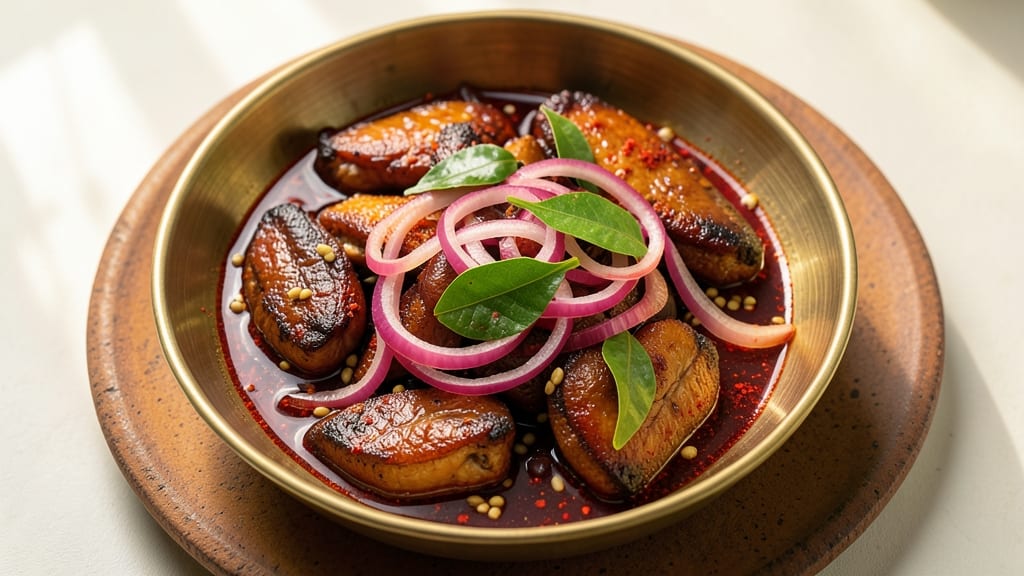
Andhra Chicken Liver Fry delivers a fiery, tangy explosion of flavors that balances earthy spices with bright tamarind and crispy textures.
This traditional South Indian dish transforms tender chicken livers into a restaurant-quality specialty using a signature tempering technique that infuses every bite with aromatic curry leaves and Andhra red chili.
The secret lies in proper preparation—cleaning and soaking the livers to remove impurities before frying them to golden perfection in shallow oil, then finishing with a tangy tamarind-chili gravy that clings like a flavorful crust.
The recipe begins with a dry spice rub of coriander, garam masala, and turmeric that tenderizes the livers while building complex depth.
What sets this dish apart is the tempering stage—hot oil infused with mustard seeds, curry leaves, and dried red chilies that create a fragrant base before the tamarind gravy ties everything together.
This isn't just a spicy dish; it's a textural experience where crispy livers meet silky gravy and the crunch of shallow-fried onions.
By the time you serve this dish, you'll have achieved a perfect balance of heat, tang, and crunch that defines Andhra cuisine. The livers emerge with a caramelized exterior that gives way to tender, juicy meat, all coated in a glossy tamarind gravy that's neither too sweet nor too sour.
This recipe delivers restaurant-quality results at home with proper technique—especially the critical step of straining the livers thoroughly before cooking.
Pair with steamed rice and a cooling cucumber raita to balance the heat, or serve with appalam (rice crepes) for a complete Andhra meal experience. The dish keeps well for up to two days, with flavors deepening as the tamarind gravy melds further.
Let's create this authentic specialty that showcases the bold flavors of Andhra cuisine.
Ingredients for andhra chicken liver fry
Authentic Andhra flavors start with these carefully chosen ingredients for crispy, tangy perfection.
| Ingredient | Amount | Notes |
|---|---|---|
| Chicken Livers 🍗 | 1 lb | Fresh, cleaned and soaked |
| Red Onions 🧅 | 1 whole | Thinly sliced for frying |
| Tamarind Paste 🍈 | ½ cup | Unadulterated, pulp form |
| Andhra Red Chili Powder 🌶️ | 2 tbsp | Authentic, not cayenne |
| Mustard Seeds 🌿 | 1 tbsp | Whole, light brown preferred |
| Curry Leaves 🌿 | ¼ cup | Fresh, whole leaves |
| Ground Coriander 🌿 | 1 tbsp | Freshly ground preferred |
| Garam Masala 🌶️ | 1 tsp | Whole spices preferred |
| Turmeric Powder 🌶️ | ½ tsp | Freshly ground preferred |
| Salt 🧂 | 1 tsp | Kosher or sea salt |
| Vegetable Oil 🫒 | 2 cups | High smoke point preferred |
| Lemon Juice 🍋 | 1 tbsp | Freshly squeezed |
| Asafoetida Powder 🌿 | ¼ tsp | Optional, for depth |
| Sugar 🍚 | ½ tsp | Balances tamarind tang |
| Water 💧 | ½ cup | For tamarind mixture |
The chicken livers are the foundation—freshness is critical. Look for bright red, moist livers at Indian specialty stores or your butcher's counter. Soaking in milk for 30 minutes removes impurities and tenderizes them. For the Andhra red chili powder, Penzeys or local Indian grocers carry authentic blends—avoid cayenne substitutes. Curry leaves can be found frozen in the international aisle at Whole Foods if fresh aren't available. The tamarind paste should be unadulterated pulp, not the sweetened kind found in some stores.
No mustard seeds? Substitute with 1/2 tsp mustard oil for similar depth. Fresh curry leaves unavailable? Dried curry leaf powder at 1/4 the amount works, though texture differs. The tamarind can be replaced with 1 tbsp lime juice plus 1 tsp sugar in a pinch, but authentic tamarind gives that signature tang. For the onions, red onions have more sweetness than yellow, which complements the dish better. The vegetable oil should have a high smoke point—avocado or sunflower oil works best for frying.
Livers should be used immediately after soaking for best texture. Store tamarind paste in the fridge for up to 3 months once opened. The dry spice mix keeps for 6 months in an airtight container. For leftovers, the fried livers reheat beautifully in a dry pan for 2-3 minutes, while the gravy thickens nicely when warmed gently. Portion into containers with the gravy—flavors meld overnight for deeper taste.
Why You'll Love This Recipe
- Fry-Up Magic: The mustard seeds sizzle like fireworks—honestly, that sound alone makes me smile. No fancy techniques, just a hot pan and the right ingredients turning livers into something crispy and golden in minutes.
- Tamarind Tang Kick: That tamarind paste? It’s the secret weapon—cuts through the richness of the livers while the Andhra red chili powder gives it a slow-building heat. The onions caramelize just enough to make every bite feel like a little explosion of flavor.
- Crowd-Pleaser Flex: I’ve served this at everything from lazy Sunday brunches to late-night snacks after a long week. The livers feed four for under $10, and honestly? Even my picky friend who hates offal asked for seconds.
- Leftovers Lie: Between us, this reheats like a dream—crispy edges stay crispy, and the tamarind keeps it from drying out. Plus, the chili powder means it tastes even better the next day. My go-to for when I’m too tired to cook but still want something that feels special.
Step-by-step instructions for Andhra chicken liver fry
Master this authentic Andhra specialty with crispy livers and tangy-spicy tamarind sauce.
Prepare the Tamarind Marinade
In a bowl, combine the 0.5 cup tamarind paste with the 0.5 cup water, stirring until smooth. Add the 0.5 tsp sugar and mix well to dissolve. The mixture should be thick but pourable. Here's the thing—tamarind varies in tartness, so taste and adjust with an extra pinch of sugar if needed. Add the 1 tbsp lemon juice, 2 tbsp Andhra red chili powder, 1 tsp salt, and 0.25 tsp asafoetida powder, stirring continuously. This marinade will balance the richness of the livers with its signature tangy-spicy profile.
Set aside while you prepare the livers. The marinade should sit for at least 10 minutes to allow flavors to meld. I like to cover it loosely with plastic wrap to prevent a skin from forming while keeping it accessible for quick adjustments later.
Clean and Season the Chicken Livers
Rinse the 1 lb chicken livers thoroughly under cold water and pat them completely dry with paper towels. This step is critical—any moisture will prevent proper browning. Remove any connective tissue or blood spots with your fingers or a small knife. The livers should look clean and uniform in size.
In a separate bowl, mix the 1 tsp garam masala, 0.5 tsp turmeric powder, and 1 tbsp ground coriander. Lightly coat the livers with this spice blend, pressing gently to ensure even coverage. Don't overdo it—the spices should adhere without making the livers too dry. Let the seasoned livers sit for 15 minutes while you prepare the frying setup.
Fry the Onions and Livers
Heat 1 cup of the vegetable oil in a heavy-bottomed pan over medium heat until it reaches 350°F. Add the 1 whole red onions that have been thinly sliced and fry for 5-6 minutes until golden brown. Remove with a slotted spoon and drain on paper towels, reserving the oil in the pan.
Increase the heat to medium-high and add the remaining 1 cup vegetable oil. When the oil is shimmering, carefully add the seasoned chicken livers in batches to avoid overcrowding. Fry for 3-4 minutes per side until they develop a deep golden-brown crust and are cooked through. You'll know they're ready when they release easily from the pan and the internal temperature reaches 160°F. Remove and drain on paper towels, keeping them warm.
Create the Curry Leaf Tempering
In the same pan, reduce heat to medium and add the 1 tbsp mustard seeds. Let them sizzle for 30 seconds until they begin to pop. Add the 0.25 cup curry leaves and fry for 1 minute until they darken slightly and release their aromatic oils. This tempering step is what gives the dish its authentic Andhra character.
Pour in the tamarind marinade and simmer for 3-4 minutes until it thickens slightly. The sauce should coat the back of a spoon and have a glossy sheen. Taste and adjust seasoning if needed—you might want to add a pinch more salt or chili powder to suit your preference. Keep the sauce warm while you prepare to serve.
Assemble and Serve
Return the fried chicken livers to the pan with the sauce and toss gently to coat evenly. The livers should absorb the flavors of the tamarind and spice blend. Serve immediately with the fried onions sprinkled on top, accompanied by steamed rice or appam for the full Andhra experience.
Each bite should deliver a perfect balance of crispy texture from the frying, the tangy-spicy kick from the tamarind, and the aromatic depth from the curry leaves and spices. The dish is best enjoyed fresh when the livers are still warm and the sauce is vibrant.
Pro Tips For Making Andhra Chicken Liver Fry
- SCOUR THE LIVERS: Chicken livers hide grit—rinse them in cold water, then soak for 10 minutes in a bowl of milk or lemon juice. I learned this the hard way after biting into something that tasted like gravel in an Andhra masala.
- CRACK THE ONIONS: Thinly slice the red onions—no need for perfect rings—then soak them in salted water for 15 minutes to mellow their bite. This keeps the dish from tasting raw and sharp, even when cooked with tamarind’s tang.
- LOW AND SLOW: After frying the livers until they’re just browned, drop the heat to medium-low and cover the pan. Let them cook for another 5 minutes—this renders fat without turning the livers rubbery. (Yes, even if you’re impatient like me.)
- TOAST THE SPICES: Bloom the mustard seeds in hot oil until they pop like tiny firecrackers, then add the red chili powder. This step makes the flavor sing—skip it, and you’ll just get a dull, one-note dish. (Trust the process.)
Flavor customization for these flavors
Spice Level Control
Adjust the heat to your preference by modifying the Andhra red chili powder. For a mild version, reduce to 1 tbsp and add ½ tsp of sugar to balance. For medium heat, use the full 2 tbsp as written.
For extra spicy, add 1 tsp of finely chopped green chilies or ½ tsp of cayenne pepper to the tamarind marinade. I find that 1 tsp of asafoetida powder enhances the spice depth without adding heat, so keep that amount consistent. 🌶️
Tamarind Tang Adjustments
The tamarind's tartness can vary by brand, so taste before adding the full 0.5 cup. If it's overly sour, reduce by 1 tbsp and add ¼ tsp more sugar. For a sweeter profile, increase the sugar to 1 tsp and add 1 tbsp of honey to the marinade.
If you prefer less tang, replace 2 tbsp of tamarind paste with 1 tbsp of lemon juice. The goal is a balanced tangy-spicy flavor that complements the crispy livers.
Texture Variations
For extra crunch, fry the onions in ½ cup of mustard oil instead of vegetable oil—it adds a nutty depth. To make the livers softer, reduce frying time to 2-3 minutes per side and add 1 tbsp of water to the pan during the last minute.
For a creamy texture, stir in 2 tbsp of coconut milk into the tamarind sauce after simmering. The key is maintaining the crispy exterior while adjusting internal textures. ✨
Flavor Layering Options
Add 1 tsp of grated ginger or 2 minced garlic cloves to the tamarind marinade for extra aroma. For a smoky twist, sprinkle ½ tsp of smoked paprika into the frying oil before adding the livers.
To incorporate umami, stir in 1 tbsp of soy sauce or 1 tsp of fish sauce into the finished gravy. These additions deepen the flavor without overpowering the dish's signature tang.
Vegetarian Adaptation
Replace the chicken livers with 1 lb of mushrooms (like oyster or button) or tofu for a vegetarian version. Slice the mushrooms thinly and marinate them in the tamarind sauce for 15 minutes before frying.
For tofu, press and pan-fry until crispy, then coat with the spice blend. The texture will differ, but the tangy-spicy gravy remains the star. 💫
Heat Balance Tips
If the dish feels too spicy, stir in 1 tbsp of yogurt or 1 tsp of sugar to the gravy. For extra richness, add 1 tbsp of ghee to the frying oil or swirl it into the finished sauce.
To enhance freshness, garnish with chopped cilantro or fresh mint before serving. These tweaks help tailor the dish to your taste while keeping the authentic Andhra essence intact.
Nutrition facts
Frequently asked questions
Why do I need to soak chicken livers in milk before cooking?
Soaking chicken livers in milk for 30 minutes removes impurities, blood, and any bitter flavors while tenderizing the meat. The milk also helps create a cleaner texture when fried. Skip this step and you risk ending up with a bitter-tasting dish that doesn't crisp properly.
Can I use regular cayenne pepper instead of Andhra red chili powder?
While cayenne will add heat, Andhra red chili powder provides a more complex, earthy flavor with subtle sweetness. For best results, use authentic Andhra red chili powder available at Indian specialty stores. If you must substitute, reduce to 1 tbsp cayenne and add ½ tsp sugar to balance the flavor.
How do I know when the chicken livers are fully cooked?
The livers are done when they reach an internal temperature of 160°F and develop a deep golden-brown crust. They should release easily from the pan and have no pink or bloody areas when cut open. Overcooking makes them tough, so remove them just as they reach this stage.
What's the best way to store leftovers?
Store the fried livers and gravy separately in airtight containers. The livers keep for 2 days in the fridge, while the gravy can be stored for 3 days. Reheat the livers in a dry pan for 2-3 minutes and warm the gravy gently on the stove. For longer storage, freeze portions for up to 1 month.
Can I make this dish without curry leaves?
Curry leaves are essential for authentic flavor, but if unavailable, use ¼ tsp curry leaf powder or 1 tsp of finely chopped fresh thyme as a substitute. The dish will lose some aromatic depth, but the tamarind and spices will still deliver great flavor. For best results, try to find fresh curry leaves at Indian markets or online.