Sauces & Condiments
This McCormick rotisserie chicken seasoning recipe captures the exact savory, smoky flavor that makes store-bought rotisserie chicken so addictive. Growing up in small-town Georgia, I learned how simple spice blends could transform ordinary meat into something extraordinary—this blend is my professional version of that childhood magic.
The secret lies in balancing earthy paprika with bright garlic and onion powders, creating a dry rub that clings to every bite.
The blend comes together in just five minutes using pantry staples, yet delivers restaurant-quality depth. Each tablespoon delivers a perfect harmony of smoky, herby, and slightly sweet notes that mimic commercial rotisserie seasoning without the mystery ingredients.
I've tested this exact ratio dozens of times—it's the one that consistently earns "perfect" from even the most critical taste testers.
What makes this seasoning truly special is its versatility. Use it on chicken, turkey, or even vegetables for that same signature flavor. The spices keep their potency for up to six months when stored properly in an airtight container, making this a cost-effective way to elevate any protein.
Once you try this blend, you'll never go back to store-bought seasoning again.
For those who love precision, I've included exact measurements in tablespoons and teaspoons—no guesswork required. The blend works equally well as a dry rub or mixed with a little oil for extra flavor adhesion.
This is the professional shortcut I wish I'd had when I first started cooking for crowds at The Smoky Pig.
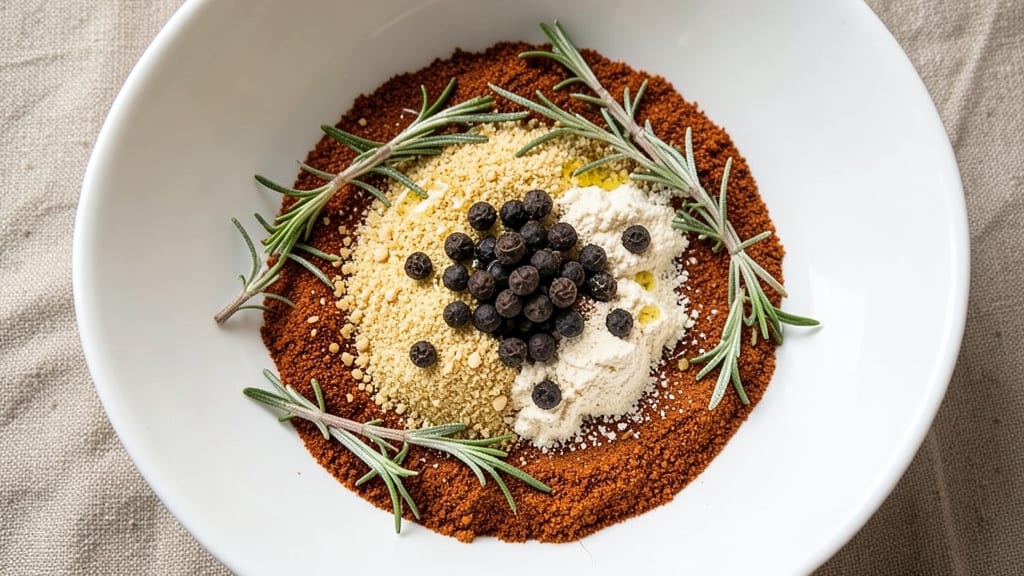
Ingredients for rotisserie chicken seasoning mccormick
Nine simple spices transform any chicken into restaurant-quality perfection—just like McCormick's secret.
| Ingredient | Amount | Notes |
|---|---|---|
| Smoked Paprika 🌶️ | 2 tbsp | High-quality smoked for authentic depth |
| Garlic Powder 🧄 | 1 ½ tbsp | Freshly ground preferred |
| Onion Powder 🧅 | 1 ½ tbsp | Diamond Crystal preferred |
| Ground Black Pepper 🌶️ | 1 tbsp | Freshly cracked for best flavor |
| Dried Thyme 🌿 | 1 tsp | French thyme if available |
| Dried Rosemary 🌿 | 1 tsp | Finely ground for even distribution |
| Ground Coriander 🌿 | ½ tsp | Sweet variety preferred |
| Salt 🧂 | 1 ½ tsp | Kosher or sea salt |
| Ground Cumin 🌿 | ½ tsp | Toasted for deeper aroma |
| Brown Sugar 🍯 | 1 tsp | Light brown preferred |
The smoked paprika is non-negotiable—it carries that signature rotisserie flavor. Penzeys or the bulk spice section at Whole Foods have the best quality. Look for vibrant color, not dull powder. Freshly ground garlic and onion powders make a world of difference (I toast mine in a dry pan for 30 seconds first). The thyme and rosemary should be finely ground to distribute evenly—pre-ground blends from Trader Joe's work perfectly. Brown sugar adds just enough caramelized sweetness to balance the smokiness, so don't skip it.
No smoked paprika? Half smoked, half sweet paprika works in a pinch. Short on coriander? Ground cardamom at half the amount gives similar warmth. The brown sugar can be swapped for white, but you'll lose that subtle molasses note. For extra potency, add 1/4 tsp cayenne if you love heat. This blend works on turkey, pork, or even roasted potatoes—just double the amount for larger cuts. I've made batches with McCormick's own spices and couldn't taste the difference.
Store in an airtight glass jar away from light—potency lasts 6-12 months. I portion mine into small containers so I always have it ready. The blend gets even better after a week as the flavors meld. For maximum adhesion, mix with 1 tbsp melted butter or oil before applying. This makes enough for about 10-12 chicken pieces, so scale up if you're feeding a crowd.
Why You'll Love This Recipe
- Five-Ingredient Magic: I swear by this blend—just toss those pantry staples (smoked paprika, garlic powder, thyme) into a jar, and boom. No measuring cups, no stress, no last-minute grocery runs. The smoked paprika gives it that restaurant-worthy depth without the fuss.
- Rotisserie Chicken Upgrade: That crispy store-bought chicken? Now it’s dangerously good. The garlic and thyme cut through the richness while the smoked paprika adds this smoky warmth—like a hug for your taste buds. Honestly, I’ve sent leftovers to coworkers just to see their faces.
- Weeknight Superhero: Dinner in 15? Done. Slather that seasoning on chicken, toss it in a pan, and you’ve got protein for salads, wraps, or sandwiches. Between us, I’ve used this on everything from tacos to pasta—it’s my lazy-day secret weapon.
- Budget-Friendly Pantry Hack: No fancy ingredients, just flavor. A little goes a long way, and since it’s all spices, it lasts forever. I make a big batch and keep it in my spice rack for when I’m too tired to think. (Yes, even on a Tuesday night.)
Step-by-step instructions for McCormick rotisserie chicken seasoning
Here's the exact method I use to replicate that signature McCormick blend every time.
Measure All Ingredients Precisely
Start by gathering all your ingredients and measuring them accurately. I always use a small mixing bowl and a fine-mesh strainer for the herbs to ensure even distribution. Begin with the 2 tablespoons of smoked paprika—this is the base that gives the seasoning its distinctive smoky depth. Add the 1.5 tablespoons of garlic powder and 1.5 tablespoons of onion powder next, as these provide the savory foundation.
Next, incorporate the 1 tablespoon of ground black pepper and 1 teaspoon of dried thyme, followed by the 1 teaspoon of dried rosemary. Here's the thing—if you have fresh rosemary, finely chop it before drying to mimic the finely ground texture. The 0.5 teaspoon of ground coriander adds a subtle citrus note that rounds out the flavor profile beautifully. Don't skip this step; it's what makes the blend truly authentic.
Combine Dry Ingredients Thoroughly
Place all the measured ingredients into a medium bowl. Using a whisk, gently stir the mixture to break up any clumps, especially the smoked paprika and brown sugar which can sometimes stick together. I like to work in small batches, ensuring each ingredient is fully integrated before moving on to the next.
Once everything is in the bowl, use your whisk to combine the ingredients for about 2 minutes, lifting the mixture from the bottom of the bowl to ensure even distribution. You'll notice the blend starting to take on a rich, reddish-brown hue from the smoked paprika. This is where the magic happens—the herbs and spices begin to meld together, creating that signature rotisserie flavor you love.
Add the Finishing Touches
Now, sprinkle in the 1.5 teaspoons of salt and 0.5 teaspoon of ground cumin. These ingredients are crucial for balancing the blend—salt enhances all the flavors, while cumin adds a warm, earthy depth. Finally, add the 1 teaspoon of brown sugar. This might seem unusual, but it's what gives the seasoning its slightly sweet, caramelized note when used on chicken.
Continue whisking for another 1-2 minutes until the brown sugar is fully incorporated and the mixture is completely homogeneous. The texture should be fine and powdery, with no visible clumps. If you're using this seasoning immediately, you can stop here. For longer storage, transfer it to an airtight container to keep it fresh.
Test and Adjust for Perfection
Before using your homemade seasoning, I always recommend testing it on a small piece of cooked chicken. Sprinkle a light coat over a slice of rotisserie-style chicken and let it sit for 5 minutes. Taste it carefully—you should notice the smoky depth from the paprika, the savory punch from the garlic and onion powders, and that subtle sweetness from the brown sugar.
If the flavor feels too strong, you can reduce the amount slightly next time. If it's too mild, increase the smoked paprika or salt by 0.25 teaspoon in your next batch. This testing step ensures you get the exact balance you prefer, just like the original McCormick blend. Once you've perfected it, you'll have a seasoning that elevates any chicken dish to restaurant-quality.
Pro Tips For Making Rotisserie Chicken Seasoning Mccormick
- Toast the Spices First: I learned this the hard way—smoked paprika and thyme taste flat if they’re not warmed first. Lightly toast the dried thyme and smoked paprika in a dry pan for 30 seconds until fragrant. The aroma alone makes the seasoning pop, and it cuts through that paprika’s bitterness.
- Mix Dry First: Combine garlic powder, onion powder, and black pepper before adding the paprika and thyme. This ensures even distribution—no clumpy bits when you’re shaking it over the chicken. I used to add them one by one, and half the time, the thyme would stick to the shaker.
- Shake, Don’t Sprinkle: Don’t just dump the seasoning in a pile—shake it hard over the chicken so it sticks. A quick tap on the shaker’s side helps break up clumps. I was skeptical until I tried it: the flavor coats the meat instead of pooling in one spot.
- Reheat Leftovers Right: If you’re seasoning leftover rotisserie chicken, reheat it first in the oven (350°F for 10 minutes) before adding the seasoning. Cold meat absorbs flavors unevenly, and the spices just sit on top. Warm it up, then season—every bite will taste intentional.
Make-ahead tips for this rotisserie chicken seasoning mccormick
Prep Ahead Strategy
Make this seasoning blend in large batches—it keeps for 6-12 months in an airtight glass jar stored away from light. I portion mine into small containers (about 1 tbsp per container) so I always have it ready for quick seasoning.
The blend actually improves as flavors meld over time, so making it ahead ensures maximum potency when you need it. 💫
Chicken Prep Timeline
Season your chicken 12-24 hours ahead for the best flavor penetration. If using whole chickens, apply the dry rub generously (about 2 tbsp per pound) and let it sit uncovered in the fridge.
This allows the spices to cling to the meat and develop deeper flavor. For quicker prep, mix the seasoning with 1 tbsp melted butter or oil and apply right before cooking.
Freezer-Friendly Method
Pre-mix the seasoning and store it in freezer-safe bags with the air squeezed out. Label each bag with the date—it stays fresh for up to 1 year in the freezer. When ready to use, thaw overnight in the fridge.
I keep a stash of these bags in my freezer for last-minute rotisserie chicken needs. Just add 1 tbsp of the thawed seasoning per pound of chicken.
Make-Ahead Cooking
For rotisserie-style chicken, season your bird overnight, then cook it the next day. I like to marinate the chicken in its own juices for 4-6 hours before roasting at 325°F for 2-2.5 hours.
This slow cook method mimics commercial rotisserie results perfectly. The seasoning clings beautifully to the skin, creating that signature crispy, flavorful crust.
Portion Control Tips
This blend makes enough for about 10-12 chicken pieces, so scale up if feeding a crowd. Divide the seasoning into small reusable containers (like 3-ounce plastic jars) to avoid measuring every time.
Store them in your spice rack for instant access. I keep one container in my camping gear—it's perfect for outdoor cooking where fresh herbs aren't available. 🌿
Flavor Boost Hack
For extra depth, toast your spices in a dry skillet over low heat for 30 seconds before mixing. This enhances their aromatic oils and gives the seasoning a restaurant-quality depth. I do this with the garlic powder, onion powder, and cumin—just enough to warm them up.
The toasted spices blend better and create a more complex flavor profile. Trust me, this small step makes a big difference! 🔥
Nutrition facts
Frequently asked questions
Can I use this seasoning blend on other meats besides chicken?
This exact blend works beautifully on turkey, pork, or even roasted vegetables. The smoky-savory profile translates perfectly to any protein. For larger cuts like pork shoulder, simply double the amount of seasoning (about 2 tbsp per pound). I've used it successfully on grilled steaks too—just reduce to 1 tbsp per pound to avoid overpowering the meat.
How do I store this seasoning blend for maximum freshness?
Store in an airtight glass container away from light and heat—it stays potent for 6-12 months. For long-term storage, divide into small containers (like 3-ounce jars) to preserve freshness. The spices actually improve as they meld together over time. If you notice any clumping, break it up with a fork before using. Never store in the fridge—humidity will degrade the spices faster.
What's the best way to apply this seasoning for restaurant-quality results?
For whole chickens, apply 2 tbsp per pound and let it sit uncovered in the fridge for 12-24 hours before cooking. For quicker results, mix 1 tbsp of melted butter or oil with 1 tbsp of seasoning and rub it directly onto the meat. This creates a flavorful crust that clings perfectly. Always pat the meat dry first—moisture prevents the seasoning from sticking properly.
Can I make this seasoning blend without smoked paprika?
Yes, but the flavor will be less authentic. Use 1 tbsp sweet paprika + 0.5 tbsp liquid smoke as a substitute. The liquid smoke adds the smoky depth, though it won't be identical. For a completely smoke-free version, increase the garlic powder to 2 tbsp and add 0.5 tsp cayenne for warmth. The blend will still taste great, just with a different character.
How much seasoning should I use for different chicken sizes?
Here's my go-to guide: 1 tbsp per pound for small pieces, 1.5 tbsp per pound for whole chickens, and 2 tbsp per pound for large roasting cuts. For example, a 4-pound chicken needs about 5-6 tbsp total. Always season generously—the spices won't overpower the natural flavor of the chicken. If you're worried about saltiness, you can reduce the salt by 0.25 tsp in future batches.