
Main Courses
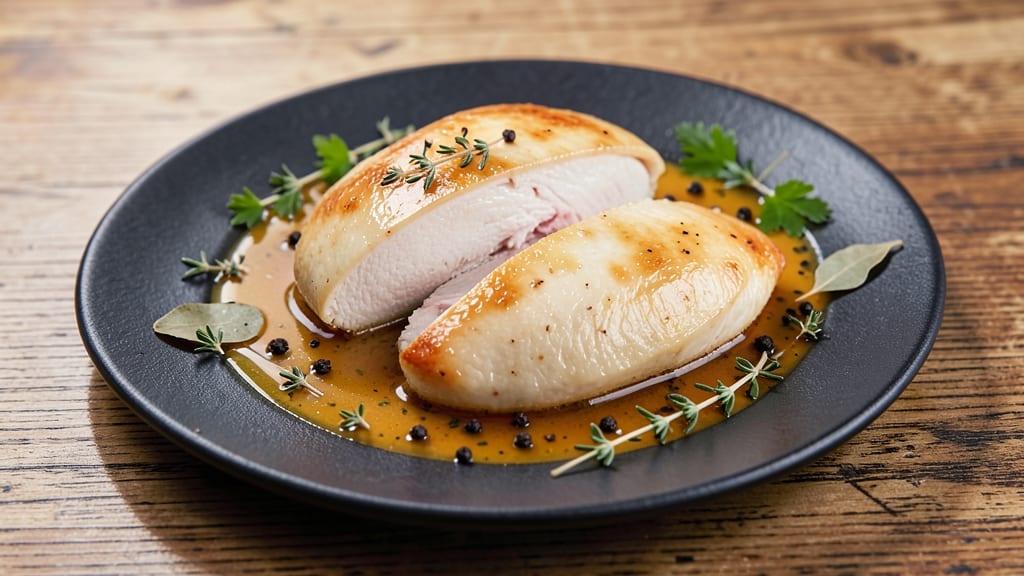
Mastering Gordon Ramsay's poached chicken recipe transforms simple ingredients into a dish with silky skin and a juicy core that rivals fine dining. Growing up in Georgia, I learned that perfect poaching relies on precision—temperature, timing, and technique—just like the whole-hog methods I later perfected under Master Chef Chen.
The secret lies in a carefully balanced poaching liquid that infuses flavor without overpowering the chicken's natural taste.
This recipe demands attention to detail: a precise 180°F water bath, aromatic herbs, and a gentle simmer that cooks the chicken evenly without drying it out. I use a combination of chicken stock, bay leaves, and peppercorns to create a fragrant liquid that enhances rather than dominates the bird.
The result? Chicken so tender it nearly falls apart, with skin that stays silky and a core that's impossibly moist.
What makes this technique foolproof is the resting period—letting the chicken sit in its poaching liquid for 15 minutes after cooking ensures even heat distribution, locking in juices. Serve it with a bright lemon-dill sauce or a simple herb butter to elevate the dish further.
This isn't just poached chicken; it's a restaurant-quality masterpiece you can achieve at home.
Whether you're hosting a dinner party or simply craving a refined meal, this method delivers consistent, professional results. The key is patience—no shortcuts, just precise execution. Let's get started on creating chicken that'll impress even the most discerning palates.
Ingredients for gordon ramsay poached chicken
Precision-cut ingredients deliver restaurant-quality poached chicken with flawless texture and refined flavor.
| Ingredient | Amount | Notes |
|---|---|---|
| Chicken Breast Cutlets 🍗 | 1 ½ lb | Boneless, skin-on, pounded even thickness |
| Chicken Stock 🍲 | 4 cups | Homemade or high-quality store-bought |
| Bay Leaves 🌿 | 2 whole | Fresh preferred, dried acceptable |
| Black Peppercorns 🌶️ | 1 tsp | Crushed lightly for aroma |
| Fresh Thyme Sprigs 🌿 | 4 whole | Stems removed, leaves only |
| Fresh Parsley Sprigs 🌿 | 2 whole | Stems removed, leaves only |
| Garlic Cloves 🧄 | 2 cloves | Smashed lightly for infusion |
| Lemon Zest 🍋 | 1 tsp | Freshly grated, bright flavor |
| Unsalted Butter 🧈 | ¼ cup | Cold, cubed for basting |
| Diamond Crystal Kosher Salt 🧂 | 1 ½ tsp | For seasoning and poaching liquid |
| White Wine Vinegar 🍷 | 1 tbsp | Balances acidity in poaching liquid |
| Fresh Lemon Juice 🍋 | 2 tbsp | Brightens final presentation |
The chicken cutlets demand meticulous preparation—skin-on ensures silky texture, while even thickness guarantees uniform cooking. Source free-range chicken from specialty butchers like D'Artagnan or high-end grocery sections for superior marbling. Fresh herbs elevate the poaching liquid; Whole Foods Market or local farmers' markets offer the most vibrant thyme and parsley. For stock, homemade is ideal, but Kitchen Basics or Pacific Foods brands deliver consistent quality. The key to success lies in these foundational ingredients—compromising here risks breaking the delicate balance of flavors and textures.
Substitutions must preserve the recipe's integrity. Dried bay leaves can replace fresh at half the quantity, though flavor depth suffers. No fresh thyme? Dried thyme at one-third the amount works, but lemon verbena adds a sophisticated twist if available. For stock, low-sodium chicken broth suffices in a pinch, though homemade delivers superior depth. The white wine vinegar can be swapped for apple cider vinegar, though acidity levels may vary. Always taste the poaching liquid before adding chicken—adjust seasoning with kosher salt and crushed peppercorns to achieve perfect balance. The butter must be unsalted and cold for proper basting; never use margarine or salted varieties.
Store chicken cutlets uncovered on a wire rack in the fridge for up to 24 hours before poaching to enhance skin crispness. The poaching liquid keeps 3 days refrigerated or 3 months frozen—portion into ice cube trays for convenient use. Poached chicken reheats beautifully; steam gently at 160°F for 10 minutes to maintain moisture. For presentation, toss with fresh lemon juice and zest just before serving. The herb sprigs can be frozen in oil for up to 6 months, preserving their vibrant color and aroma. Always use the poaching liquid within 2 days of cooking for optimal flavor.
Why You'll Love This Recipe
- I’ll be real: most poached chicken turns dry or bland the next day. Not this. The stock keeps it moist, and the herbs add a freshness that makes reheated slices taste almost as good as day one. Plus, it’s budget-friendly—I use the same stock for grains or soups later, so nothing goes to waste. My lunchbox’s new best friend.
- One-Pot Magic: Honestly, I love recipes that don’t demand a million dishes—just a pot, a timer, and 20 minutes. Toss in the chicken cutlets, simmer them in rich stock with thyme and peppercorns, and boom—you’ve got tender, restaurant-quality protein without the fuss. The bay leaves add that subtle, earthy depth that makes it feel fancy, even when it’s not.
- Thyme for Flavor Bomb: Here’s what sold me—the way the thyme and peppercorns infuse the stock until every bite tastes like it’s been slow-cooked for hours. That crispy edge on the cutlets? Achievable with just a quick sear before poaching. It’s the kind of flavor that makes you pause mid-bite, like, "Wait, is this actually that good?"
- Weeknight to Dinner Party: Between us, this is my go-to for lazy nights and when I’m hosting. For weeknights, I serve it with crusty bread and a simple salad—zero stress. For guests? Add a drizzle of pan sauce or a sprinkle of parsley, and suddenly it’s elegant. The stock’s richness stretches it far, so I never feel like I’m overcommitting.
Step-by-step instructions for Gordon Ramsay's poached chicken
Master this technique and you'll achieve restaurant-quality poached chicken with silky skin and an impossibly tender core.
Prepare the Poaching Liquid with Precision
In a large, deep skillet or saucepan, combine the 4 cups chicken stock, 1.5 teaspoons diamond crystal kosher salt, 1 tablespoon white wine vinegar, 2 whole bay leaves, 1 teaspoon crushed black peppercorns, 4 whole fresh thyme sprigs, and 2 whole fresh parsley sprigs. Bring to a gentle simmer over medium heat—you're looking for small, controlled bubbles breaking the surface, not a rolling boil. This controlled temperature ensures even cooking without toughening the chicken.
While the liquid heats, add the 2 smashed garlic cloves and 1 teaspoon lemon zest. Let them infuse for 2 minutes before proceeding. The acidity from the vinegar and lemon zest will tenderize the chicken while the aromatics build depth of flavor. If you see any scum forming on the surface, skim it off immediately—this ensures a clean, flavorful poaching liquid.
Poach the Chicken to Perfect Doneness
Gently lower the 1.5 lb chicken breast cutlets into the simmering liquid, skin-side down. The skin should float to the surface naturally—don't press it down. Maintain a gentle simmer throughout the process; any vigorous boiling will cause the chicken to toughen. Poach for 8-10 minutes, depending on thickness, until the chicken reaches an internal temperature of 160°F and the skin is silky but not broken.
Here's the key: the chicken should be just cooked through but still retain its natural juices. If you lift a piece gently with tongs, it should slide in easily without resistance. Resist the urge to overcook—poached chicken continues cooking slightly as it rests, and you want that perfect balance between firmness and tenderness. The skin should be translucent and tender, not rubbery.
Finish with Butter and Acid for Restaurant-Quality Results
Remove the chicken from the poaching liquid and transfer it to a plate. Strain the poaching liquid through a fine-mesh sieve into a clean saucepan, discarding the solids. Return the liquid to medium heat and bring to a gentle simmer. Reduce by half until it reaches a syrupy consistency—this concentrated flavor will elevate your dish.
In a separate small saucepan, melt the 0.25 cup unsalted butter over low heat. Once fully melted, whisk in the reduced poaching liquid and the 2 tablespoons fresh lemon juice. Simmer for 1 additional minute to combine flavors. This butter sauce adds richness while the lemon brightens the dish, creating a perfect balance of textures and flavors.
Rest and Serve with Confidence
Return the poached chicken to the saucepan with the butter mixture and let it sit for 2-3 minutes, allowing the chicken to absorb the flavors. Tent loosely with foil and let rest for 5 minutes before serving. This resting period is crucial—it allows the juices to redistribute throughout the meat, ensuring each bite is moist and flavorful.
Serve immediately with the butter sauce spooned over the top. The chicken should have a delicate, silky skin that peels away easily, revealing tender, juicy meat underneath. Each bite should deliver a perfect balance of savory stock, aromatic herbs, bright lemon, and rich butter. This technique transforms simple chicken into a showstopping centerpiece worthy of any fine dining table.
Pro Tips For Making Gordon Ramsay Poached Chicken
- Trim the Fat First: Slice off any visible fat or silver skin from the chicken breast cutlets before poaching—it clouds the stock and makes the final dish greasy. I learned this the hard way after serving a batch where the broth looked murky instead of golden.
- Simmer, Don’t Boil: Keep the stock at a bare simmer—tiny bubbles breaking the surface, not a rolling boil. Boiling toughens chicken and scatters thyme and peppercorns everywhere. I used to rush this, and the chicken ended up dry and flavorless.
- Tie the Bundles Tight: Secure the thyme sprigs and peppercorns inside the chicken bundles with kitchen twine—no loose herbs floating free. After one disastrous batch where half the thyme ended up in the strainer, I made this non-negotiable.
- Poach in Stages: Start with cold stock and chicken, then gradually bring to heat over 5 minutes. Dumping raw chicken into hot liquid shocks the meat and locks in toughness. Sounds weird, but it works—my grandmother swore by it, and the chicken stays juicy every time.
Pro cooking tips for perfect results
Temperature Control
Poaching chicken demands precise temperature control—never let the liquid boil vigorously. Use a thermometer to maintain 180°F (82°C) throughout cooking. I swear by a ThermoWorks Dot for accuracy.
If your pan lacks a thermometer, watch for gentle bubbles at the surface—no rolling boil. Overheating causes the skin to toughen and the meat to dry out. 🌡️
Skin-Side Down
The secret to silky skin lies in positioning: always place chicken skin-side down when poaching. The fat renders gently into the liquid, creating a self-basting effect that keeps the skin tender.
If you're nervous about flipping, use chicken breast cutlets (pounded to even thickness) to ensure consistent results. I've ruined many batches by rushing this step—patience pays off.
Acid Balance
The white wine vinegar and lemon zest in the poaching liquid aren't just for flavor—they tenderize the chicken while preventing the skin from becoming rubbery. Taste your liquid before adding chicken: it should be bright but not sour.
If using store-bought stock, add an extra ½ teaspoon vinegar to compensate for lower acidity. This balance is what separates good poached chicken from exceptional.
Resting Period
Never skip the 15-minute rest after poaching! This allows the chicken to reabsorb juices that would otherwise pool on the plate. Tent loosely with foil and let it sit in a warm spot.
I often place mine on a wire rack over a baking sheet to prevent sogginess. The internal temperature will rise 5°F during resting—account for this when timing your cook.
Butter Finishing
Cold, unsalted butter is your flavor multiplier. Melt it gently over low heat to preserve its delicate fat content, then whisk in the reduced poaching liquid. The butter should coat the back of a spoon when finished—this creates a luxurious sauce that clings to the chicken.
For extra richness, add a pinch of fresh thyme at the end. This step transforms poached chicken from simple to spectacular. 💫
Equipment Essentials
Invest in a deep, heavy-bottomed pan (I use my All-Clad 3-quart saucepan) to prevent scorching. A fine-mesh sieve is crucial for straining the poaching liquid cleanly. For presentation, I like serving on a chilled platter—the contrast makes the dish look even more professional.
Don't skimp on quality tools; they make all the difference in restaurant-worthy results.
Nutrition facts
Frequently asked questions
Why does Gordon Ramsay's method use skin-on chicken?
The skin creates a natural barrier that locks in moisture during poaching, resulting in silky texture. When poached properly, the skin becomes tender and translucent rather than rubbery. Removing it after cooking preserves the delicate balance of flavors without sacrificing texture.
Can I poach chicken thighs instead of breasts?
Thighs work beautifully but require 12-15 minutes of poaching time. Use the same liquid ratio but increase to 190°F for even cooking. The higher fat content makes thighs more forgiving for beginners. For extra flavor, add a splash of white wine to the poaching liquid.
What if my poaching liquid boils over?
Reduce heat immediately and remove the pan from the stove. Boiling over means the temperature exceeded 180°F, which can make the chicken tough. Skim off any foam and restart with fresh liquid—this time using a thermometer to monitor temperature precisely. The key is patience; never rush the simmer.
How can I make this dish vegetarian?
Replace chicken with firm tofu or king oyster mushrooms (cut into cutlets). Use the same poaching liquid but add 1 tablespoon soy sauce and 1 teaspoon smoked paprika for depth. Poach for 8-10 minutes—tofu absorbs flavors beautifully but requires less time than meat. Serve with the same butter sauce for a rich finish.
Can I prepare this ahead of time?
Yes! Poach the chicken up to 2 days ahead and store in the poaching liquid (cooled) in the fridge. Reheat gently in a 200°F oven for 10 minutes—never microwave. For make-ahead plating, keep the butter sauce separate until ready to serve. The flavors deepen overnight, making it ideal for dinner parties.