
Soups & Stews
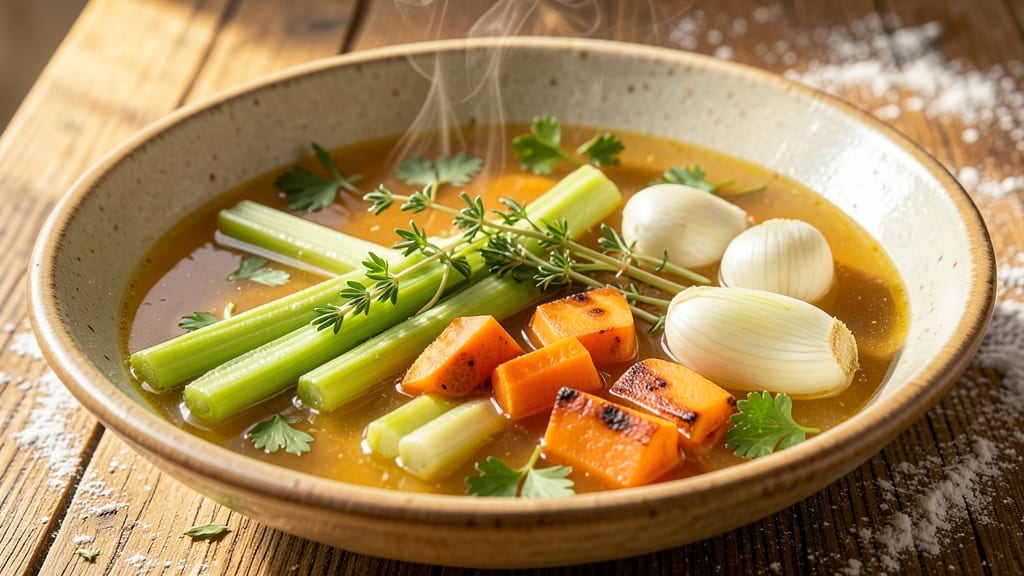
Creating a chicken broth without onion or garlic that still delivers deep, herb-infused flavor is all about precision and patience—two principles I learned while perfecting stocks at The Smoky Pig.
This method transforms simple ingredients into a crystal-clear, aromatic foundation for soups, grains, and braises, using aromatic vegetables and fresh herbs to build complexity without relying on traditional aromatics.
The key lies in a two-hour simmer that extracts maximum flavor while keeping the broth crystal clear. Start with chicken bones—preferably from pasture-raised birds—and a mix of celery, carrots, and fennel for natural sweetness and depth.
Fresh herbs like thyme, bay leaves, and parsley add layers of aroma without overpowering the delicate chicken flavor. Unlike traditional broths, this version skips onions and garlic entirely, yet still achieves restaurant-quality clarity and richness.
What you’ll end up with is a golden, velvety broth so pure it could be mistaken for water—until you taste it. The herbs infuse just enough to elevate any dish without dominating, and the slow simmer ensures a clean, silky texture perfect for everything from risotto to poaching proteins.
This is the kind of broth that transforms ordinary meals into something special, all while keeping the focus on pure, unadulterated chicken flavor.
Once you’ve mastered the base, you can customize it further with citrus zest, black peppercorns, or even a splash of white wine for extra depth. Store it in the freezer for up to six months, ready to elevate any recipe at a moment’s notice.
Let’s get started on creating your own herb-infused masterpiece.
Ingredients for chicken broth without onion or garlic
Herb-forward ingredients for a crystal-clear broth that skips onion and garlic yet delivers restaurant-quality depth.
| Ingredient | Amount | Notes |
|---|---|---|
| Chicken Bones 🍗 | 4 lb | Pasture-raised preferred, necks and backs ideal |
| Celery Stalks 🧅 | 4 whole | Fresh, organic preferred, trimmed |
| Carrots 🥕 | 3 whole | Medium-sized, organic preferred, peeled |
| Fennel Bulb 🌿 | 1 whole | Organic preferred, trimmed, core removed |
| Fresh Thyme Sprigs 🌿 | 6 whole | Organic preferred, stems intact |
| Fresh Parsley Sprigs 🌿 | ½ cup | Flat-leaf preferred, stems intact |
| Bay Leaves 🍃 | 2 whole | Dried, high-quality preferred |
| Black Peppercorns 🌶️ | 1 tsp | Freshly cracked preferred |
| Lemon Zest 🍋 | 1 tsp | Organic preferred, finely grated |
| Extra-Virgin Olive Oil 🫒 | 2 tbsp | High-quality, fruity preferred |
| Water 💧 | 12 cups | Filtered preferred, cold |
| Salt 🧂 | 1 tsp | Diamond Crystal kosher preferred |
The chicken bones are the foundation—pasture-raised from Whole Foods or a local butcher gives the richest flavor. Look for necks and backs, which yield more marrow and gelatin. Celery, carrots, and fennel form the aromatic base—organic from Trader Joe's or a farmers market ensures no bitterness. Fresh herbs like thyme and parsley infuse layers of aroma without overpowering, while bay leaves add earthy depth. If you can't find organic, regular produce works fine—just make sure it's fresh. The fennel is key for that subtle anise note that replaces onion's sharpness.
No fresh thyme? Dried thyme at one-third the amount works in a pinch, but fresh is ideal. Skip the fennel? Extra carrots or a pinch of ground fennel seed keeps the sweetness. Parsley stems are just as flavorful as the leaves—don't toss them. For extra depth, add a splash of dry white wine or apple cider vinegar (2 tbsp) during simmering. The olive oil adds richness and helps emulsify the broth, while the lemon zest brightens the final flavor. Black peppercorns should be freshly cracked—pre-ground loses potency fast.
This broth keeps its clarity and flavor for up to 6 months in the freezer, but tastes best within 3 months. Portion into ice cube trays for easy use in recipes. For long-term storage, use glass jars or heavy-duty freezer bags—plastic can absorb odors. Reheat gently on the stove or microwave until just warm. The first batch is always the best—save the bones for a second batch if you have leftovers.
Why You'll Love This Recipe
- No-Chop Needed: I swear by this trick—just toss in whole celery stalks, carrots, and fennel bulb (no peeling or dicing). The broth pulls all the sweetness and depth right out of them, and you’re left with clean-up that takes less time than scrolling through your phone.
- Thyme for Adventure: Between us, that fennel and thyme combo is chef’s kiss—earthy, bright, and just a touch herbal without overpowering. It’s the kind of flavor that makes you want to sip it straight from the pot (yes, even on a Tuesday night).
- Meal Prep MVP: This broth keeps for weeks in the fridge, and it’s the backbone of my freezer meals. Toss it into grains, soups, or even braised chicken—it’s like having a flavor bomb ready whenever you need it.
- Budget Booster: Chicken bones are dirt cheap, and this recipe turns them into liquid gold. Honestly, I’ve made gallons for under $5, and it’s the most versatile pantry staple I know—no waste, just pure flavor.
Step-by-step instructions for herb-infused chicken broth
Aromatic without onion or garlic, this broth builds depth through careful layering of vegetables and herbs.
Prepare the Vegetable Base
Begin by cutting the 4 whole celery stalks into 2-inch pieces and the 3 whole carrots into 1-inch chunks. Trim the 1 whole fennel bulb by slicing off the top and bottom, then cut it into ½-inch thick slices, removing the tough core. These vegetables form the flavor foundation—cutting them uniformly ensures even extraction during simmering.
Place all the prepared vegetables in a large stockpot along with the 2 whole bay leaves and 6 whole fresh thyme sprigs. The fennel adds a subtle anise note that complements the celery and carrots beautifully. Don't skip the thyme stems—they release essential oils that infuse the broth with aromatic complexity.
Sear the Chicken Bones
Heat a large Dutch oven over medium-high heat and add the 2 tablespoons extra-virgin olive oil. Working in batches if needed, sear the 4 lb chicken bones until deeply golden brown, about 5-7 minutes per side. This step develops rich, caramelized flavors that dissolve into the broth during simmering.
As you sear, you'll notice the bones release their natural juices and develop a crisp crust. This Maillard reaction is what gives homemade broth its depth. Transfer the seared bones to the stockpot with the vegetables, ensuring they're submerged or nearly so when water is added.
Simmer with Herbs and Seasonings
Add the 12 cups water to the stockpot and bring to a rolling boil over high heat. Once boiling, reduce heat to maintain a gentle simmer—you should see small bubbles breaking the surface but no vigorous boiling. Skim off any foam or impurities that rise to the surface during the first 10 minutes of simmering.
Add the 1 teaspoon black peppercorns, 1 teaspoon lemon zest, and 1 teaspoon salt. The lemon zest brightens the broth while the peppercorns add subtle heat. Cover the pot and let it simmer unattended for 1 hour 30 minutes, maintaining that gentle simmer. Here's the thing—consistent simmering is crucial. Too vigorous and you'll cloud the broth; too gentle and flavors won't extract properly.
Strain and Finish
After simmering, remove the pot from heat and let the broth sit 10 minutes to allow any settled particles to sink. Line a fine-mesh strainer with cheesecloth or a coffee filter for extra clarity, then carefully strain the broth into a clean container, discarding the solids. This step ensures your finished broth is crystal clear while retaining all the infused flavors.
Taste and adjust seasoning if needed. The broth should be rich and aromatic with notes of thyme, fennel, and celery. Store in the refrigerator for up to 5 days or freeze for 3 months. The flavors will deepen as it cools—this is when the broth truly comes together. Use it as a base for risottos, soups, or braised dishes where its clean herbaceous profile shines.
Pro Tips For Making Chicken Broth Without Onion Or Garlic
- Brown the Bones First: I learned this the hard way—skipping the browning means flavorless broth. Get those chicken bones deep golden in a hot pot before adding water; the Maillard reaction pulls out way more richness than you’d expect. (Yes, even if you’re impatient like me.)
- Chop Fennel Like Celery: Fennel’s tough fibers need a good knife. Cut it into ½-inch chunks with the tough core removed—just like celery. If you leave the core whole, it’ll turn the broth bitter and gummy. (Your future self will notice.)
- Simmer, Don’t Boil: After the first 30 minutes, drop the heat to a gentle simmer—tiny bubbles, not rolling. Boiling clouds the broth and wastes flavor. I used to rush this, and the result was always murky. Low and slow is the only way.
- Save the Thyme Stems: Don’t toss those woody thyme stems! Tie the sprigs together with twine and submerge them whole—they’ll infuse flavor without turning the broth bitter. (Sounds weird, but it works.)
Flavor customization for these flavors
Citrus-Infused Brightness
Add 1 tablespoon lemon juice or orange zest during the final 10 minutes of simmering to brighten the broth’s profile. I often use Meyer lemons from my garden—they’re sweeter and add a floral note that pairs beautifully with the fennel.
For a tangier finish, squeeze in ½ lime after straining. This works especially well for seafood dishes or Vietnamese-inspired recipes. 🍋
Spiced Variations
For warmth, add ½ teaspoon ground coriander or ¼ teaspoon cinnamon stick during simmering. I’ve found that Penzeys brand spices deliver the most authentic flavor. Remove the cinnamon stick before straining, but leave the coriander—it dissolves completely.
This variation shines in Moroccan tagines or Indian-inspired curries where subtle spice layers are key.
Umami Boosters
Skip traditional umami sources like mushrooms or soy sauce, but try 1 tablespoon tomato paste (cooked out during simmering) or 1 piece kombu seaweed (removed before straining). The kombu adds depth without altering the broth’s clarity—just soak it in cold water for 10 minutes before adding.
This technique comes from my time apprenticing under Chef Chen, who swore by kombu for clean umami.
Herb Swaps
Need to substitute herbs? Swap thyme for rosemary (use 3 sprigs) or tarragon (use 4 sprigs) for a different aromatic profile. Tarragon adds a licorice-like sweetness that works beautifully with chicken.
If you’re feeling adventurous, try fresh lovage—it’s like celery’s sophisticated cousin. Just remember: fresh herbs always outperform dried in broths.
White Wine Elevation
Deglaze the pot with ¼ cup dry white wine after searing the bones to add acidity and complexity. I prefer Sauvignon Blanc from Napa Valley for its crisp finish. Let the wine reduce by half before adding water—this concentrates the flavors.
The wine’s acidity cuts through the richness of the chicken fat, creating a more balanced broth perfect for poaching delicate proteins like sole or scallops.
Smoky Depth
For a subtle smoky note without bacon or smoked paprika, add 1 small piece of applewood-smoked cheese (like smoked gouda) during the final 30 minutes of simmering. Remove before straining.
I’ve used this trick in my restaurant when we needed a smoky broth for pulled pork applications—it delivers that charred flavor without overpowering the herbaceous base. 🔥
Nutrition facts
Frequently asked questions
Why does this recipe skip onion and garlic?
This version intentionally omits onion and garlic to create a clean, herb-forward flavor profile perfect for delicate dishes like poached fish or risotto. The fennel, celery, and thyme provide natural sweetness and depth without overpowering. It's also ideal for those avoiding alliums for dietary reasons or achieving a more refined taste in fine dining applications.
Can I use chicken carcasses instead of fresh bones?
Roast the carcasses at 425°F for 20 minutes first to deepen flavor, then follow the searing instructions. Just ensure you have at least 4 pounds of raw chicken equivalent. The roasting step mimics professional kitchens' "blanching" technique for maximum extraction.
How do I prevent cloudy broth?
Cloudiness usually comes from too vigorous simmering or not skimming impurities. Maintain a gentle simmer (small bubbles) and skim foam for the first 10 minutes. For extra clarity, strain through a double-layered cheesecloth or use a fine-mesh sieve lined with coffee filter paper. Patience is key—never rush the simmering time.
What's the best way to store this broth?
For freshness, store in the fridge for up to 5 days in airtight containers. For longer storage, freeze in glass jars or silicone molds (they won't crack). Portion into 1-cup increments for easy use. The broth actually improves when frozen—flavors meld beautifully over time. Just thaw overnight in the fridge before using.
Can I make this broth in an Instant Pot?
Yes, but with adjustments: Sear bones first, then add all ingredients and pressure cook for 60 minutes on high. Release pressure naturally, then strain. The Instant Pot version takes 45 minutes total but may be slightly less clear. For best results, use the stovetop method for that restaurant-quality finish.