
Main Courses
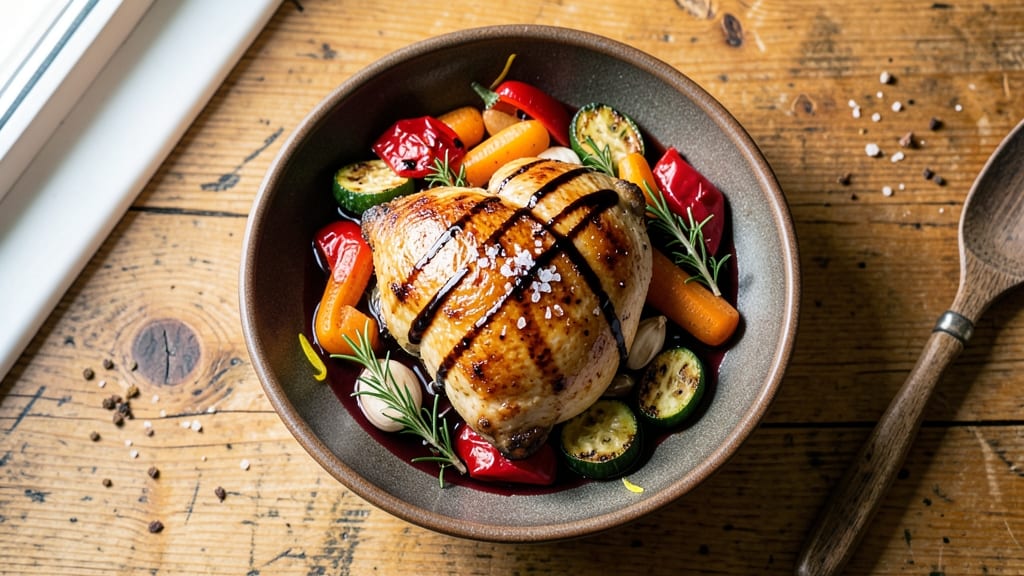
Balsamic chicken with roasted vegetables transforms a simple weeknight dinner into a restaurant-worthy meal with just one caramelized glaze and a sheet pan of seasonal produce. The secret lies in marinating the chicken overnight—this ensures tender, flavor-packed bites that absorb the balsamic's deep, tangy sweetness while roasting. What starts as a basic sheet pan meal becomes a symphony of textures: crispy chicken skin, jammy glaze, and perfectly caramelized vegetables that cling together like a cohesive dish.
The beauty of this recipe is its foolproof simplicity—no fancy techniques required. You'll start with a quick marinade of balsamic vinegar, olive oil, and herbs, then let the chicken and vegetables roast together on one sheet pan.
The balsamic reduction happens right in the oven, creating a glossy, sticky glaze that coats every bite. This method cuts down on cleanup while delivering restaurant-quality results that impress even skeptical guests.
By the time you're plating, you'll have golden-brown chicken thighs with a glossy, caramelized crust, tender roasted vegetables that hold their shape, and a sauce so rich it drizzles effortlessly.
The contrast of sweet, tangy glaze against the savory chicken and earthy vegetables creates a balance that's both comforting and sophisticated. It's the kind of dish that feels indulgent yet comes together with minimal effort—perfect for a busy weeknight when you still want to feel like you've made something special.
Whether you're serving this for a family dinner or hosting friends, the versatility of this recipe shines. Swap in seasonal vegetables like asparagus, Brussels sprouts, or sweet potatoes, or adjust the marinade with garlic, mustard, or a splash of red wine for added depth.
The technique scales easily, so you can double the recipe without breaking a sweat. Let's get cooking—this dish is about to become your new go-to for effortless elegance.
Ingredients for balsamic chicken with roasted vegetables
This elegant weeknight dinner starts with tender chicken thighs and seasonal vegetables transformed by a caramelized balsamic glaze.
| Ingredient | Amount | Notes |
|---|---|---|
| Boneless, Skinless Chicken Thighs 🍗 | 1 ½ lb | Trimmed of excess fat for best results |
| Balsamic Vinegar 🍷 | ½ cup | Aged balsamic for richer flavor |
| Extra-Virgin Olive Oil 🫒 | ¼ cup | High-quality for marinade richness |
| Garlic Cloves 🧄 | 4 cloves | Minced for deep flavor infusion |
| Fresh Rosemary 🌿 | ¼ cup | Finely chopped, stems removed |
| Fresh Thyme 🌿 | ¼ cup | Leaves only, chopped |
| Yellow Onion 🧅 | 1 whole | Cut into wedges for roasting |
| Baby Carrots 🥕 | 1 lb | Whole or halved for even roasting |
| Red Bell Pepper 🍆 | 1 whole | Cut into strips for color contrast |
| Sea Salt 🧂 | 1 ½ tsp | Diamond Crystal preferred |
| Ground Black Pepper 🌶️ | ½ tsp | Freshly cracked for optimal flavor |
| Honey 🍯 | 1 tbsp | For glaze sweetness balance |
| Brown Sugar 🍚 | 1 tbsp | Enhances caramelization |
The chicken thighs are the backbone of this dish—bone-in, skin-on yields the most flavor, but boneless works too. Trader Joe's and Whole Foods carry excellent cuts, but any grocery store's fresh chicken section will do. Look for thighs with good marbling and vibrant color. The balsamic vinegar should be aged (the thicker, the better)—San Marzano brand is my go-to for that deep, complex flavor. Fresh herbs are non-negotiable here; dried will work in a pinch but lacks the bright aroma. If you're short on time, pre-chopped herb blends from the grocery store work fine, though they're not as fresh.
No aged balsamic? Red wine vinegar plus 1 tsp brown sugar mimics the depth. Fresh thyme unavailable? Dried thyme at one-third the amount suffices. The vegetables are completely flexible—swap in zucchini, asparagus, or Brussels sprouts based on what's seasonal. For a deeper marinade, add 1 tbsp Dijon mustard or 2 tbsp red wine. The honey and brown sugar in the glaze can be adjusted to taste; if you prefer less sweetness, reduce to 1 tsp each. Pre-cut vegetables save time, but whole carrots and bell peppers roast beautifully with their skins on for added texture.
Marinated chicken keeps 24 hours in the fridge—flavor develops overnight. Roasted vegetables stay fresh for 3-4 days if stored separately. The glaze can be made ahead and reheated gently; it thickens as it cools. For meal prep, assemble the sheet pan the night before and refrigerate—roast straight from cold. Leftovers reheat beautifully in a 350°F oven for 10 minutes with a splash of water to maintain moisture. Portion into glass containers for easy grab-and-go lunches.
Why You'll Love This Recipe
- Here’s what sold me: the chicken thighs get that just-right crispy skin while staying juicy inside, all thanks to the olive oil and slow roast. Drizzle that balsamic at the end? Pure satisfaction—sweet, tangy, sticky goodness that makes every bite feel like a little reward.
- One-Pan Magic: I swear by this recipe because it’s the kind of meal where you toss everything on a single sheet pan—chicken thighs, chopped veggies, garlic, rosemary—and walk away. No pots, no pans, no stress. The balsamic glaze caramelizes right on that same pan while you’re pretending to do laundry.
- Crispy-Tender Perfection: Here’s what sold me: the chicken thighs get that just-right crispy skin while staying juicy inside, all thanks to the olive oil and slow roast. Drizzle that balsamic at the end? Pure satisfaction—sweet, tangy, sticky goodness that makes every bite feel like a little reward.
- Meal Prep MVP: Between us, this is my go-to for busy weeks. Roast a big tray on Sunday, and you’ve got lunch or dinner covered for days. The flavors only deepen as it sits—honestly, the leftovers are often better than the first round. Pack it cold or reheat it, and no one will guess it’s not fresh.
Step-by-step instructions for balsamic chicken with roasted vegetables
Here's how to create a perfect balance of tender chicken and caramelized vegetables with that rich balsamic glaze.
Marinate the Chicken for Maximum Flavor
In a large bowl, combine the 0.5 cup balsamic vinegar, 0.25 cup extra-virgin olive oil, 1 tbsp honey, 1 tbsp brown sugar, 1.5 tsp sea salt, and 0.5 tsp ground black pepper. Whisk until the sugar and salt dissolve completely—this ensures even distribution of flavors.
Add the 1.5 lb boneless, skinless chicken thighs to the marinade, turning to coat them thoroughly. Cover and refrigerate for at least 2 hours, but I recommend going up to 4 hours for deeper flavor penetration. The longer they marinate, the more tender and flavorful the chicken will become. If you're short on time, even 30 minutes will help, but don't skip this step entirely—it makes all the difference.
Prep and Roast the Vegetables
Preheat your oven to 425°F for maximum caramelization. In a large bowl, toss the 1 lb baby carrots, 1 whole red bell pepper cut into strips, and 1 whole yellow onion cut into wedges with 1 tbsp extra-virgin olive oil, 1 tbsp minced garlic cloves, 0.25 cup chopped fresh rosemary, and 0.25 cup chopped fresh thyme. Spread them evenly on a large baking sheet, leaving space between each piece for proper air circulation.
Roast the vegetables for 20-25 minutes, stirring once halfway through, until they're tender and golden brown with caramelized edges. You'll know they're done when they smell intensely sweet and the carrots pierce easily with a fork. Remove them from the oven and set aside—they'll continue cooking slightly while the chicken finishes.
Sear the Marinated Chicken
Remove the chicken from the marinade, letting any excess drip off (don't discard the marinade—we'll use it for the glaze). Heat a large oven-safe skillet over medium-high heat until hot. Add the chicken thighs, skin-side down, and sear for 4-5 minutes until golden brown. Flip and cook for another 4-5 minutes until the internal temperature reaches 165°F. The chicken should be golden and slightly crispy on the outside while remaining juicy inside.
Transfer the skillet to the preheated oven and continue roasting for 8-10 minutes to ensure the chicken is fully cooked through. This dual-cooking method gives you both a perfect sear and even cooking.
Create the Caramelized Balsamic Glaze
While the chicken roasts, place the reserved marinade in a small saucepan over medium heat. Bring to a gentle simmer and reduce by half—this should take about 8-10 minutes—until it thickens slightly and becomes syrupy. You're looking for a deep, glossy reduction that coats the back of a spoon. Stir occasionally to prevent burning, and if it reduces too quickly, lower the heat slightly.
Once the glaze reaches the desired consistency, remove it from heat and stir in 1 tbsp minced garlic cloves and 1 tbsp chopped fresh rosemary. The glaze should be rich, slightly sticky, and have a beautiful deep amber color. This is where all the magic happens—the concentrated flavors of the balsamic vinegar and honey meld together to create something truly special.
Combine and Serve
Remove the chicken from the oven and transfer it to a serving platter. Spoon the caramelized balsamic glaze evenly over the chicken, letting it drip down the sides. Return the vegetables to the baking sheet, drizzle with any remaining glaze, and toss gently to coat. The vegetables will absorb the glaze beautifully, adding another layer of flavor.
Let everything rest for 5 minutes before serving—this allows the juices to redistribute in the chicken, ensuring each bite is moist and flavorful. Serve the balsamic chicken with the roasted vegetables directly on the plate, garnished with a sprinkle of fresh thyme leaves. The contrast of tender chicken, caramelized vegetables, and that rich balsamic glaze makes this dish truly unforgettable.
Pro Tips For Making Balsamic Chicken With Roasted Vegetables
- CRISP THE THIGHS FIRST: Pat the chicken thighs bone-dry with paper towels before searing—this isn’t just about flavor, it’s about getting that golden crust. I used to skip this, and my balsamic sauce would just soak in instead of caramelizing. Two tablespoons of olive oil in the pan, high heat, and don’t move them until they release naturally.
- SIMMER THE BALSAMIC LOW: After deglazing with vinegar, reduce the sauce on medium-low heat—this isn’t a race. I learned the hard way that boiling it too fast turns it bitter. A splash of chicken fat or a pinch of sugar (if you’re feeling fancy) helps balance the acidity without overpowering the rosemary.
- CHOP ROSEMARY COARSELY: Don’t mince that rosemary into oblivion—tear it into rough ½-inch sprigs. Whole sprigs infuse better and look nicer on the plate. If you’re lazy, just strip the needles off the stems with your fingers; no knife needed.
- ROAST VEGGIES SEPARATELY: Toss the vegetables in their own bowl with oil and salt, then roast them 5 minutes before the chicken goes in. This way, they’re perfectly tender by the time the chicken finishes, and you’re not crowding the pan. (Yes, even if it means an extra tray.)
Perfect pairings for these flavors
Crispy Sides
For a satisfying crunch, serve this dish with garlic-parmesan roasted potatoes. Toss 2 lbs baby potatoes with 2 tbsp olive oil, 3 minced garlic cloves, 2 tbsp grated parmesan, 1 tsp dried rosemary, and ½ tsp salt.
Roast at 425°F for 35 minutes until golden. The crispy edges contrast beautifully with the tender chicken and soft vegetables. 🥔
Fresh Greens
A simple arugula salad with lemon vinaigrette cuts through the richness perfectly. Toss 4 cups baby arugula with 2 tbsp extra-virgin olive oil, 1 tbsp fresh lemon juice, ½ tsp honey, ¼ tsp flaky sea salt, and 1 tbsp chopped walnuts.
The peppery bite balances the sweetness of the balsamic glaze.
Bread Pairings
Warm focaccia bread or crusty baguette slices make ideal companions. Toast the bread with 1 tbsp olive oil and ½ tsp garlic powder, then serve alongside the dish.
The bread soaks up any extra glaze drippings, adding another delicious element to the meal. For extra flair, sprinkle with fresh thyme leaves before serving.
Wine Recommendations
A medium-bodied Chianti Classico pairs beautifully with this dish. Its bright acidity and cherry notes complement the balsamic glaze while cutting through the richness of the chicken. For a white wine option, try a dry Vermentino—its citrusy profile refreshes the palate between bites.
Avoid heavy reds like Cabernet Sauvignon, which can overpower the delicate flavors. 🍷
Beer Pairings
For beer lovers, a Belgian witbier like Hoegaarden or Blue Moon creates a refreshing contrast. The citrusy coriander notes enhance the balsamic sweetness, while the effervescence cleanses the palate. Alternatively, a light lager like Peroni or Heineken provides a crisp, neutral backdrop that lets the dish shine.
Dessert Balance
End the meal with something light like lemon sorbet or dark chocolate-dipped strawberries. The tartness of the sorbet or the bittersweet chocolate balances the richness of the main course.
For a simpler option, serve vanilla bean ice cream with a drizzle of balsamic reduction—it ties the meal together beautifully. 🍓
Nutrition facts
Frequently asked questions
Can I use chicken breasts instead of thighs?
You can, but thighs work better for this recipe! Chicken thighs stay juicier and absorb more flavor during the long roasting time. If using breasts, reduce roasting time by 5-7 minutes and check for 165°F internal temp earlier. For best results, brine the breasts for 30 minutes before marinating to prevent dryness.
How do I make the balsamic glaze thicker?
Simmer the reduced marinade for 2-3 extra minutes until it reaches a syrupy consistency that coats the back of a spoon. For an instant fix, mix 1 tsp cornstarch with 1 tbsp water, stir into the hot glaze, and cook for 1 minute until thickened. Avoid over-reducing—you want glossy, not hard candy-like texture.
What vegetables work best for roasting?
Any hard, dry vegetables work beautifully! Try Brussels sprouts, asparagus, sweet potatoes, or zucchini. For even roasting, cut larger pieces (like potatoes) into 1-inch chunks. Avoid leafy greens—they'll wilt instead of caramelize. The key is even spacing on the sheet pan for crispy edges.
Can I prepare this ahead of time?
Marinate the chicken up to 24 hours ahead. Roast the vegetables 1 day ahead and store at room temp (they'll crisp up when reheated). For the glaze, make it 1 day ahead and reheat gently. Assemble everything just before serving—this keeps the chicken juicy and the vegetables crisp.
Why did my glaze turn bitter?
Balsamic glaze can turn bitter if overcooked or made with white vinegar instead of aged balsamic. Always use aged balsamic vinegar and reduce on medium-low heat. If it tastes too sharp, balance with 1 tsp honey or brown sugar. For extra depth, add 1 tsp Dijon mustard to the marinade before reducing.