Main Courses
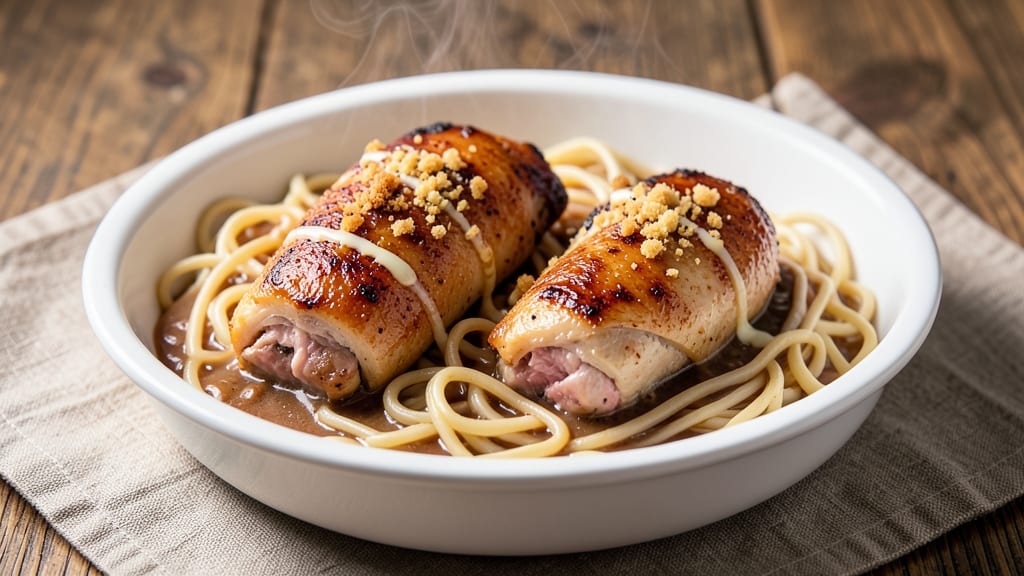
This baked chicken and egg noodles recipe delivers bistro-style comfort in one pan—tender chicken, al dente noodles, and a creamy sauce that ties everything together. The secret lies in browning the chicken first for deep flavor, then baking everything at once for hands-off convenience.
I've perfected this technique over years of weeknight cooking, ensuring each bite delivers juicy chicken and perfectly cooked noodles without a single dish to wash.
The beauty of this dish is its simplicity: just a handful of ingredients that come together in 30 minutes for a meal that feels restaurant-worthy. The chicken stays moist thanks to a simple marinade, while the egg noodles absorb the rich, savory sauce beautifully.
This recipe is designed to work with whatever protein you have on hand—chicken thighs or breasts both shine here.
What you'll end up with is a golden, bubbling casserole where every forkful combines tender chicken, chewy noodles, and a velvety sauce that's impossible to resist. The aroma alone will have everyone gathered at the table, and the leftovers reheat perfectly for busy days.
It's the kind of dish that transforms a simple dinner into a cozy family tradition.
Whether you're feeding a crowd or meal prepping for the week, this recipe scales beautifully while maintaining its comforting essence. The one-pan method means less cleanup, and the balance of flavors ensures it's a crowd-pleaser every time. Let's get cooking—this is comfort food at its finest.
Ingredients for baked chicken and egg noodles
These simple, flavorful ingredients create a bistro-worthy one-pan chicken noodle casserole.
| Ingredient | Amount | Notes |
|---|---|---|
| Boneless Chicken Thighs 🍗 | 1 ½ lb | Skin-on preferred for flavor |
| Egg Noodles 🍝 | 12 oz | Fresh or dried, al dente preferred |
| Heavy Cream 🥛 | ½ cup | Full-fat for richest sauce |
| Chicken Broth 💧 | 1 cup | Low-sodium preferred |
| Unsalted Butter 🧈 | 2 tbsp | For browning chicken |
| All-Purpose Flour 🌾 | 2 tbsp | For thickening sauce |
| Garlic Cloves 🧄 | 4 cloves | Minced for marinade |
| Dijon Mustard 🍯 | 1 tbsp | For depth of flavor |
| Dried Thyme 🌿 | 1 tsp | Or 1 tbsp fresh thyme |
| Kosher Salt 🧂 | 1 ½ tsp | Adjust to taste |
| Black Pepper 🌶️ | ½ tsp | Freshly ground preferred |
| Parmesan Cheese 🧀 | ¼ cup | Freshly grated for topping |
| Fresh Parsley 🌿 | ¼ cup | Chopped for garnish |
| Olive Oil 🫒 | 1 tbsp | For pan searing |
The chicken is the star here—skin-on thighs stay juicier than breasts during baking. Grab them from the butcher counter if possible, or look for organic options at Whole Foods or Trader Joe's. The egg noodles? Fresh is ideal (they cook faster), but dried works too—just boil them 2 minutes less than package instructions. The Parmesan should be freshly grated from a block—pre-shredded gets clumpy. For the broth, low-sodium is key so you can control the seasoning. I always double-check the expiration date on dried thyme since it loses potency fast once opened.
No chicken thighs? Breasts work too—just pound them to even thickness so they cook uniformly. Running short on heavy cream? Half-and-half or whole milk stretches it, though the sauce won't be quite as rich. The Dijon mustard adds that signature tang—if you're out, yellow mustard in a pinch (reduce to 1 tsp). Fresh thyme unavailable? Dried at one-third the amount (so 1/3 tsp) keeps the flavor profile. The Parmesan can be swapped for Pecorino Romano if you're feeling fancy. For the egg noodles, whole wheat or gluten-free versions work if needed—just adjust cooking time.
This casserole reheats beautifully—5 minutes at 350°F is perfect for leftovers. Store in an airtight container for 3-4 days in the fridge or freeze portions for up to 3 months. I like to portion it into individual servings before freezing so I can grab one for busy nights. The sauce thickens as it cools, so a splash of chicken broth when reheating keeps it creamy. Garnish with extra Parmesan and parsley right before serving—that fresh pop of color makes it look restaurant-worthy.
Why You'll Love This Recipe
- One-Pan Magic: I swear by this—just toss the chicken thighs and noodles on a sheet pan, pour the broth and cream over them, and bake. No pots, no pans, no stress. The butter melts right into the noodles while the chicken gets juicy, and honestly? That’s my kind of cooking.
- Creamy Crispy Contrast: The heavy cream makes the sauce silky, but the chicken thighs get that golden, slightly crispy edge when baked. It’s the kind of dish where every bite has two textures—rich and tender, with a little satisfying crunch. (Yes, even on a Tuesday night.)
- Leftovers That Don’t Suck: This recipe actually improves the next day. The flavors meld even better, and the noodles soak up all that creamy goodness. I’ll pack it for lunch or reheat it for dinner—no sad, dry leftovers here. Plus, it’s cheap to make, so you can feed the whole family without breaking the bank.
- Weeknight Workhorse: Need something fast but still feels special? This is it. The chicken thighs stay juicy while the noodles get tender, and the broth adds depth without extra effort. I’ve served it to guests, packed it for game days, and even made it for my picky teenager—he ate every bite. That’s versatility.
Step-by-step instructions for baked chicken and egg noodles
This one-pan method delivers bistro-style comfort with minimal effort and maximum flavor.
Sear the Chicken Thighs for Maximum Flavor
Heat the 1 tablespoon olive oil in a large oven-safe skillet over medium-high heat until shimmering. Pat the 1.5 lb boneless chicken thighs completely dry with paper towels—this ensures crispy skin. Season both sides generously with 1 tsp kosher salt and 0.25 tsp black pepper, then add them to the skillet.
Sear for 5-6 minutes per side until the skin is deep golden brown and the internal temperature reaches 165°F. The chicken should release easily from the pan when ready. Remove the thighs and set aside on a plate, leaving the rendered fat in the skillet. This fat becomes the flavor base for your sauce.
Create the Flavorful Sauce Base
Reduce the heat to medium and add the 2 tablespoons unsalted butter to the skillet. Let it melt completely, then add the 4 minced garlic cloves and cook for 30 seconds until fragrant—don't let them brown or they'll turn bitter. Stir in the 1 tablespoon Dijon mustard and 1 teaspoon dried thyme, cooking for another 1 minute to blend the flavors.
Sprinkle the 2 tablespoons all-purpose flour over the mixture and whisk vigorously for 1-2 minutes until it forms a smooth, thick paste. This roux will thicken your sauce beautifully. Pour in the 1 cup chicken broth all at once and stir constantly, scraping up any browned bits from the bottom of the pan. Bring to a gentle simmer and cook for 3-4 minutes until slightly thickened.
Cook the Egg Noodles to Al Dente Perfection
Add the 12 oz egg noodles to the skillet, stirring to coat them completely in the sauce. The noodles should sizzle gently as they absorb the flavorful liquid. Cover the skillet and cook for 8-10 minutes, stirring occasionally, until the noodles are al dente—tender but still with a slight bite. You'll know they're ready when they float to the surface and the sauce clings to them.
If the sauce looks too thick, add 2-3 tablespoons hot water to loosen it to your desired consistency. The goal is a creamy, velvety sauce that coats every strand of noodle. Remove the skillet from heat and stir in the 0.5 cup heavy cream, letting it warm through for 1 minute without boiling.
Combine and Bake to Golden Comfort
Return the chicken thighs to the skillet, spooning the creamy sauce over them. The residual heat will gently cook the chicken through while keeping it juicy. Transfer the entire skillet to a preheated 375°F oven and bake for 10-12 minutes until the chicken reaches 175°F internally and the sauce bubbles around the edges.
Watch the edges carefully—they should develop a golden crust while the sauce remains creamy. If the sauce starts to separate, stir it gently before returning to the oven. The high heat of the oven will finish cooking the noodles perfectly while infusing them with the chicken's juices.
Finish and Serve with Fresh Herbs
Remove the skillet from the oven and let it rest for 2-3 minutes before serving. This resting period allows the sauce to thicken slightly and the flavors to meld. Sprinkle the dish generously with 0.25 cup freshly grated Parmesan cheese and 0.25 cup chopped fresh parsley, tossing gently to distribute.
Serve immediately from the skillet, letting each person scoop their portion. The combination of crispy chicken, al dente noodles, and rich cream sauce creates a comforting, bistro-style meal that's perfect for weeknight dinners. The flavors only get better as the dish sits, so don't wait too long to enjoy!
Pro Tips For Making Baked Chicken And Egg Noodles
- Sear the Chicken First: That golden crust on the chicken isn’t just for looks—it locks in flavor and keeps the meat juicy. Hit the thighs with a quick 3-minute sear in a hot skillet before baking, then transfer them to your dish. I used to skip this, and the chicken always ended up dry and bland.
- Par-Cook the Noodles: Egg noodles finish fast in the oven, but they’ll turn to mush if you bake them raw. Boil them al dente (about 2 minutes less than package time), drain well, and toss with a little butter to prevent sticking. This keeps them tender without turning to glue.
- Deglaze with Broth Early: Don’t wait until the end to add the chicken broth—pour it in while the chicken is searing to collect all those browned bits. They’re packed with flavor, and skipping this step means a dull, watery sauce. Just a splash now makes a real difference later.
- Whisk the Cream Cold: Heavy cream curdles faster than you’d think in a hot oven. Stir it into the broth after removing the dish from heat, and keep the whole thing under 350°F (175°C) to avoid scrambling. Cold cream + low heat = creamy, not lumpy.
Pro cooking tips for this dish
Sear First, Bake Second
This dish relies on a two-stage cooking process that transforms ordinary chicken into restaurant-quality bites. Always brown the chicken thighs in the skillet first—this creates a Maillard reaction that builds deep, savory flavor.
I recommend using skin-on thighs for extra crispiness, but if you prefer breasts, pound them to even thickness so they cook uniformly. The key is to sear until the skin reaches golden brown and the internal temperature hits 165°F—this ensures juicy meat that won't dry out during baking. 🔥
Roux Magic for Creamy Sauce
The secret to that velvety sauce lies in making a proper roux with butter, flour, and chicken broth. Whisk the 2 tbsp flour into the melted butter until it forms a smooth paste—this takes about 1-2 minutes of constant stirring.
The roux should be pale golden (not brown) before adding the broth. If you rush this step, the sauce will taste raw and floury. For extra richness, I sometimes add 1 tsp Dijon mustard to the roux—it adds a subtle tang that balances the creaminess. 💛
Noodle Timing Tricks
Egg noodles cook faster than you think when combined with sauce, so don't overcook them! Start checking for al dente texture after 8 minutes of covered simmering. The noodles should be tender but still have a slight bite. If they're floating and the sauce is clinging, they're ready.
Pro tip: Add 2-3 tbsp hot water if the sauce gets too thick—this keeps it silky without diluting the flavor. Fresh noodles cook in half the time of dried, so adjust accordingly. ✨
Oven Finish Perfection
The final bake at 375°F is where everything comes together. Return the chicken to the skillet and spoon sauce over it—this ensures every bite gets that creamy coating. Bake for 10-12 minutes until the chicken reaches 175°F internally and the sauce bubbles at the edges.
Watch closely: the edges should develop a golden crust while keeping the sauce creamy. If the sauce starts to separate, stir it gently before returning to the oven. The residual heat will finish cooking the noodles perfectly. 🌟
Rest Before Serving
This is a step many skip but shouldn't! Let the dish rest for 2-3 minutes after baking. This allows the sauce to thicken slightly and the flavors to meld together.
I also recommend garnishing with fresh parsley and grated Parmesan right before serving—this adds a pop of color and freshness that makes the dish look (and taste) restaurant-worthy. The flavors actually improve as they sit, so don't rush serving time. 💫
Equipment Essentials
You only need three essential tools for this recipe: an oven-safe skillet (I use a 12-inch cast iron for best results), a meat thermometer (to check chicken temps), and a wooden spoon for stirring. The skillet must be oven-safe—All-Clad or Lodge cast iron are my top picks.
For extra crispy chicken skin, I sometimes broil the dish for 1-2 minutes at the very end, but watch it closely to avoid burning. The right equipment makes all the difference in texture and flavor. 💡
Nutrition facts
Frequently asked questions
Can I use chicken breasts instead of thighs?
Yes, but you'll need to adjust the cooking time! Pound chicken breasts to even thickness (about 1/2-inch) so they cook uniformly. They'll cook faster than thighs, so remove them when they reach 165°F internally—usually 4-5 minutes per side for searing. The breasts will finish cooking during the 10-12 minute bake, but check with a thermometer to avoid drying them out.
What if my sauce gets too thick or too thin?
For a thick sauce, add 2-3 tablespoons hot chicken broth and stir until smooth. If it's too thin, remove from heat and whisk in 1 teaspoon cornstarch mixed with 1 tablespoon cold water. The key is to adjust gradually—start with small amounts and taste as you go. The sauce should coat the back of a spoon but still be pourable.
Can I make this dish ahead of time?
This casserole reheats beautifully. Assemble it completely (including baking), then refrigerate in an airtight container for up to 3 days. To reheat, cover with foil and bake at 350°F for 15-20 minutes until heated through. For freezing, portion into individual servings and freeze for up to 3 months. Thaw overnight in the fridge before reheating.
Why did my chicken turn out dry?
Overcooking is the most common cause. Always use a meat thermometer—remove chicken at 165°F when searing, and aim for 175°F after baking. Skin-on thighs stay juicier than breasts. Another tip: Don't overcrowd the pan when searing. If you're using breasts, pound them thinner and sear at medium heat to avoid drying. The oven finish should be just 10-12 minutes at most.
What can I add for extra flavor?
Try these easy upgrades: Sauté 1/2 cup mushrooms with the garlic for earthy depth, or add 1/2 teaspoon smoked paprika to the chicken marinade. For a cheesy twist, sprinkle 1/2 cup shredded Gruyère on top before baking. Don't forget fresh herbs—chopped chives or basil add brightness. Just remember: add extras during the sauce stage or as garnish to preserve texture.